
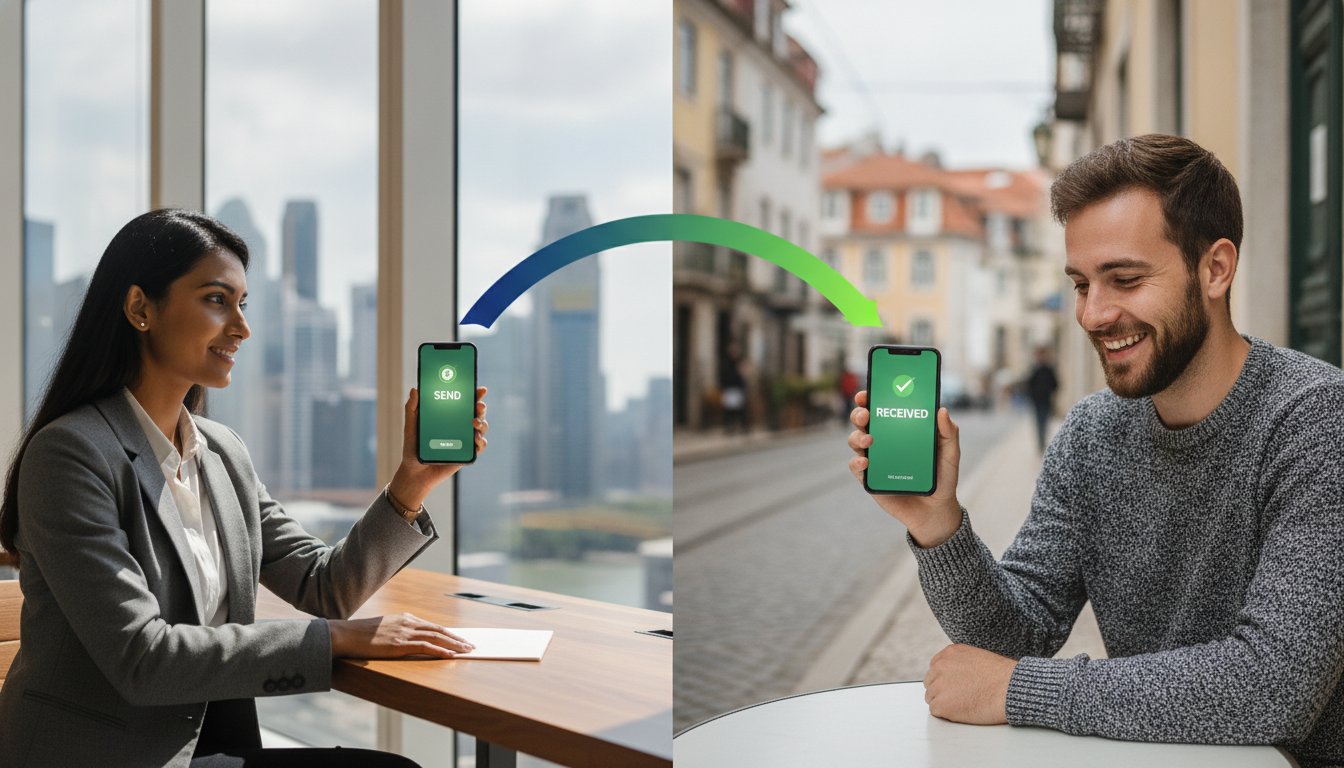
Why does it still take three business days for your bank to move digital data when you can stream 4K video across the ocean in milliseconds? In 2026, the era of waiting for settlement times is officially over. You've likely felt the sting of hidden currency fees or the headache of navigating complex SWIFT requirements just to send money to a friend abroad. It's frustrating to watch your funds sit in a "pending" limbo while traditional institutions lean on outdated infrastructure. We agree that your financial reach should be as fast and borderless as your digital life.
This guide explores the world of instant peer to peer payments, showing you exactly how modern ledgers bypass slow banking rails to move money in real time. You'll discover how to choose the fastest, most secure apps for both local and global transfers without getting trapped by high costs. We'll also break down the tech behind these speeds and provide a clear roadmap to help you avoid P2P-specific scams. It's time to simplify your transfers and embrace a financial experience that prioritizes your convenience and peace of mind.
Key Takeaways
- Master the mechanics behind instant peer to peer payments to move money directly without the multi-day delays of traditional banking systems.
- Eliminate "middleman" costs and hidden currency markups by leveraging modern cross-border P2P solutions.
- Protect your digital assets by identifying the latest P2P scams and utilizing advanced biometric authentication.
- Discover how innovative tools like email payments simplify global transfers into a single, hassle-free step.
- Learn to fund and settle transactions in real-time, ensuring your money is available exactly when it's needed.
What are Instant Peer to Peer (P2P) Payments?
Peer-to-peer transactions are direct digital transfers between individuals that bypass traditional intermediaries like retail bank branches. In 2026, instant peer to peer payments have become the global benchmark for financial movement. We've moved beyond the era of "standard transfers" that left funds in limbo for days. Real-time settlement is now a standard expectation. When you hit send, the money arrives. It's that simple. Adopting instant peer to peer payments isn't just about speed; it's about reclaiming control of your own capital. The tech-savvy expert knows that speed is a security feature, not just a luxury.
This evolution from physical cash to digital handshakes has redefined our relationship with money. Mobile wallets have replaced leather ones, serving as sophisticated hubs for global connectivity. This technology is currently disrupting the global remittance market, which is part of a P2P sector projected to grow to $4.28 trillion in 2026 according to market research. By removing the "middleman" banks that historically charged heavy fees for simple transfers, P2P systems empower users with direct control over their assets. It's a bold departure from the old banking model. Instead of waiting for a bank's permission to move your own money, you initiate the transfer on your own terms. This level of empowerment is what makes the modern digital lifestyle possible.
Key Terminology: Wallets, Ledgers, and Rails
Your digital wallet is your personal financial hub. While the wallet is the interface, "payment rails" are the infrastructure moving the data. Traditional rails are like slow freight trains; modern P2P rails are fiber-optic. You aren't waiting for physical cash to move. You're witnessing a ledger update. The system instantly updates balances, making the transfer final in seconds.
The Social and Economic Impact of Instant Transfers
Real-time payments drive financial liberation. For the unbanked, mobile-first access provides a gateway to the global economy. This shift fuels the gig economy. Freelancers get paid the moment work is done. We've also moved from complex account numbers to social identifiers. Using an email address to send money makes the process feel as natural as sending a message. It removes friction entirely.
The Mechanics of Speed: How P2P Transactions Happen Instantly
Understanding the "instant" in instant peer to peer payments requires a look under the hood. It isn't magic; it's a highly orchestrated digital sequence that happens in the blink of an eye. While traditional systems rely on manual checks and physical reconciliation, modern P2P architecture is built for the speed of the internet. We've replaced slow, human-led processes with automated protocols that prioritize your time and security. Here is how the money actually moves from your screen to theirs.
- Step 1: Funding. You initiate the transfer by pulling value from a linked debit card, bank account, or digital asset. The app checks for available liquidity immediately.
- Step 2: Authentication. Security shouldn't slow you down. The system uses biometrics, such as FaceID or fingerprint scanning, alongside 2FA to verify the transaction in milliseconds.
- Step 3: The Digital Handshake. This is the core of the process. The platform executes a ledger synchronization. Instead of waiting for physical currency to move between banks, the system updates the internal records for both the sender and receiver simultaneously.
- Step 4: Instant Notification. The recipient receives a push notification the moment the ledger updates. The funds are visible and ready for use right away.
- Step 5: Settlement. While the user sees the money instantly, the "behind-the-scenes" reconciliation between financial institutions happens later. The app essentially front-loads the credit to ensure you don't have to wait.
Real-Time Settlement vs. Batch Processing
Traditional banks take three days because they use batch processing. Systems like ACH or SWIFT group transactions together and process them in large chunks at specific times. It's an efficient model for 1985, but it's a bottleneck in 2026. Modern fintechs use APIs to connect disparate financial systems instantly. By maintaining pre-funded pools of liquidity, these platforms can guarantee instant peer to peer payments because they've already solved the settlement delay before you even hit send.
Funding Sources and Their Impact on Speed
Your choice of funding dictates the friction you'll face. Debit cards are the preferred choice over credit cards because they pull from existing funds, avoiding the high fees and interest rates associated with credit. However, the ultimate way to achieve zero-latency is through a wallet balance. By keeping a balance within a reliable global P2P app, you skip the external banking rails entirely. This creates a closed-loop system where money moves as fast as a text message, providing the ultimate hassle-free experience.
P2P Beyond Borders: Breaking the International Bank Barrier
While domestic transfers now feel seamless, the true test of financial liberation lies in moving money across borders. Traditional international banking remains a slow, expensive relic of a previous era. When you send money through a legacy bank, your funds often travel through a "correspondent banking" chain. This means multiple middleman banks each take a cut, leading to high fees and hidden exchange rate markups that can strip away significant value. In 2026, instant peer to peer payments have effectively dismantled this barrier by connecting users directly through localized digital ledgers.
Modern P2P architecture eliminates the need for these intermediary banks entirely. By maintaining multi-currency support within a single application, these platforms allow you to hold, convert, and send different currencies without waiting for traditional settlement cycles. This is particularly vital when sending money to restricted or developing regions where traditional banking infrastructure is often fragmented or inaccessible. We've moved toward a borderless experience that prioritizes your ability to support global connections without the friction of legacy systems. It's a bold shift that puts the power of a global treasury in your pocket.
Remittances: The Heart of Global P2P
Families worldwide rely on the speed of instant peer to peer payments for emergency support and daily essentials. In remittance corridors like those serving Cuba and the wider Caribbean, waiting three days for a bank transfer is often not an option. The industry has seen a massive transition from risky physical cash-pickup models to secure mobile-wallet-deposits. This digital-first approach ensures that funds are available for immediate use, whether for local recharges or essential purchases, providing a sense of security that traditional systems simply cannot match.
Currency Conversion and Transparency
Transparency is the foundation of trust in digital finance. Many legacy providers lure users with "zero fee" marketing, only to hide their costs in inflated exchange rates. To avoid these traps, look for platforms that offer real-time rate locking, which protects you from market volatility during the transfer. Mid-market rates represent the real-time midpoint between global buy and sell prices, serving as the only honest benchmark for fair currency exchange. By choosing apps that stick to these transparent standards, you ensure that more of your money actually reaches its destination.

Is It Safe? Navigating the Security Landscape of P2P
Speed is a powerful tool, but it requires a robust shield. The core challenge with instant peer to peer payments is the "irreversibility" problem. Because these transactions settle in seconds, there's no "stop payment" button like you find with traditional checks. This speed makes fraud harder to claw back once the digital handshake is complete. With the annual cost of cybercrime projected to exceed $10.5 trillion by 2025, security isn't just an extra feature; it's the foundation of the entire system. We've built these systems to be fast, but we've also made them incredibly resilient.
Scammers often exploit this immediacy through clever social engineering. The "Accidental Transfer" scam involves a fraudster sending you money from a stolen account and then begging you to send it back to their "real" account. When the bank realizes the original funds were stolen, they'll pull them from your balance, leaving you out of pocket for the money you "returned." Marketplace fraud is equally common, where buyers are pressured to use P2P for goods that never arrive. To combat this, modern platforms adhere to strict regulatory standards like KYC (Know Your Customer) and AML (Anti-Money Laundering). In Europe, the MiCA framework has set new benchmarks for digital asset safety, ensuring a more secure environment for everyone.
Under the hood, your data stays invisible through advanced encryption and tokenization. Tokenization replaces your actual card or bank details with a unique digital identifier, ensuring that even if a hacker intercepts a transaction, they gain nothing of value. You should prioritize platforms that treat your privacy with this level of technical rigor. To experience this high-performance security firsthand, you can secure your global transfers here. We believe in removing barriers without ever compromising on your peace of mind.
Advanced Security Features to Look For
Don't settle for basic password protection. Demand biometric authentication, such as FaceID or fingerprint scanning, as a mandatory step for every send. Your app should provide instant push notifications for every transaction attempt, allowing you to flag unauthorized activity immediately. Behind the scenes, sophisticated AI now detects unusual payment patterns in real-time, blocking suspicious transfers before they even leave your wallet. These tools empower you to move money with confidence.
Best Practices for Secure Sending
Your first line of defense is simple: double-verify social identifiers. Always confirm the recipient's email, phone number, or username before hitting send. Use P2P primarily for trusted personal networks rather than commercial transactions with strangers. If you do use it for business, remember that the IRS reporting threshold for commercial transactions is $600 for 2026. If you suspect a compromise, freeze your linked accounts and contact support immediately to secure your digital footprint.
DUC App: Redefining Instant Global P2P Connectivity
DUC App bridges the gap between local ease and global reach. It functions as a bold innovator in a market often slowed by legacy thinking. By facilitating instant peer to peer payments across a network spanning over 100 countries, the platform ensures your capital moves as fast as your ideas. We've optimized the infrastructure to support remittance corridors in Europe, Latin America, and Asia, solving the hard problems of liquidity so you don't have to. You get the reliability of a professional financial tool with the vibrant energy of a modern lifestyle app.
Send money as easily as sending a message. The innovative "Email Payments" feature eliminates the need for complicated IBAN or SWIFT requirements. It's a direct, simplified approach that transforms how you interact with your global network. You stay in control. You move at your own pace. Whether you're sending a gift or supporting a business partner, the process remains entirely hassle-free. This is the borderless financial experience you've been waiting for.
Support for global methods like Visa, Mastercard, and Apple Pay comes standard. This breadth of choice ensures that funding your wallet is always a frictionless experience. DUC App specializes in hard-to-reach corridors, such as Cuba, where traditional options often fail. It provides a reliable, high-performance bridge for users who need to move money where it matters most, ensuring that funds arrive without the typical delays of correspondent banking.
Beyond Just Transfers: The DUC Ecosystem
The DUC platform is more than a transfer tool; it's a comprehensive financial hub. You can execute international recharges and manage gift cards without leaving the app. For e-commerce developers, our API integration offers a robust environment to build and scale global payment solutions. Holding funds in a secure digital wallet gives you the flexibility to convert and send money exactly when you need to, bypassing the volatility of traditional markets. It's about empowerment and removing the barriers to your global success.
Getting Started with DUC App
Experience a 60-second signup process that respects your time. Download the app, link your preferred payment method, and initiate your first transfer immediately. Our latest version, 2.4.8, released in April 2026, provides the most stable and secure environment for your digital assets yet. We've streamlined every step to ensure your first experience is as smooth as your hundredth. Experience the freedom of instant global payments with DUC App.
Embrace the Future of Borderless Finance
The transition from traditional banking to real-time digital movement isn't just a trend; it's the new global standard. You now have the tools to bypass the slow, expensive correspondent banking chains that once held your funds hostage. By mastering the mechanics of instant peer to peer payments, you've gained the power to move capital across borders with the same ease as sending a text message. We've explored how advanced encryption and biometric security keep your assets safe while digital ledgers eliminate the hidden fees that used to drain your transfers.
This liberation allows you to support family in hard-to-reach regions like Cuba or manage global payouts without the headache of legacy paperwork. DUC App provides the high-performance infrastructure you need to stay connected. Trusted by thousands for secure remittances and offering support for 20+ global payment methods, it ensures your financial reach is truly limitless. With 24/7 fraud monitoring and robust encryption, you can move money with absolute confidence. It's time to step into a seamless experience that prioritizes your peace of mind.
Start sending money globally with DUC App today. Your journey toward total financial empowerment begins now.
Frequently Asked Questions
Are P2P payments really instant?
Yes, most modern P2P transfers happen in seconds because they use real-time ledger updates rather than waiting for traditional bank reconciliation. While the behind-the-scenes settlement between financial institutions might take longer, the platform front-loads the credit so your recipient sees the funds immediately. This immediate availability is what makes the digital experience feel seamless and empowered.
Can I send money to someone who doesn't have the same app?
It depends on the platform, but many apps now use social identifiers like email addresses to bridge this gap. If you send money via an email payment to someone without the app, they'll usually receive a notification with instructions on how to claim the funds. This flexibility ensures you don't need to worry about which specific digital wallet your recipient prefers.
Is there a limit on how much money I can send via P2P?
Every platform sets its own limits based on account verification levels and banking partnerships. For instance, verified Venmo accounts can send up to $60,000 per week, while individual banks using Zelle set their own daily caps for small businesses and personal accounts. You should always check your specific app's settings to understand your current transaction and weekly volume ceilings.
What is the difference between P2P and a wire transfer?
P2P payments are typically faster, cheaper, and more user-friendly than traditional wire transfers. Wire transfers often require complex SWIFT or IBAN details and can take 24 to 48 hours to clear through the banking system. In contrast, instant peer to peer payments use modern rails to move money in seconds using only an email or phone number as an identifier.
Can I use instant P2P payments for international remittances?
Absolutely, and it's often the most efficient way to support family or friends abroad. Modern platforms specialize in cross-border corridors, providing real-time currency conversion and immediate deposits into mobile wallets. This eliminates the need for physical cash-pickup and bypasses the high fees and hidden markups associated with traditional international banking systems.
How do I get my money out of a P2P app and into my bank account?
You can move funds to your bank account using either a standard transfer or an instant transfer option. Standard transfers are usually free but take 1 to 3 days to settle. If you need the cash immediately, most apps offer an instant transfer to a linked debit card for a small percentage fee, which typically sits around 1.75% for platforms like PayPal or Venmo.
What happens if I send money to the wrong person?
Because P2P transfers are designed for speed, they are generally irreversible once you press the send button. You should always double-check the recipient's details before confirming any transaction. If a mistake happens, your best course of action is to request a refund from the recipient directly or contact the app's support team immediately, though fund recovery isn't always guaranteed.
Are there fees for using instant peer to peer payments?
Many domestic transfers are free when you use a bank account or an existing wallet balance. Fees typically apply when you fund a transfer with a credit card, which often carries a 3% charge, or when you choose an instant cash-out to your bank. For international instant peer to peer payments, costs are usually found in currency conversion markups, so choosing a transparent provider is essential.


