

Sending money to Cuba with a Visa card in 2026 shouldn't feel like a relic of a bureaucratic past. It's time to stop treating international remittances like a complex banking chore and start seeing them as a seamless digital handshake. While the Cuban Central Bank suspended in-country Visa processing in June 2026, you can still easily send money to cuba with visa card apps to fund essential transfers from abroad. You're likely tired of the high transaction fees and the endless waiting for MLC cards to update. We know that the traditional paperwork and regulatory hurdles feel designed to slow you down.
This guide cuts through the noise to show you how to bypass the delays and complex affidavits. You'll discover how to leverage modern fintech apps to achieve instant or same-day transfers to MLC accounts with transparent, low fees. We'll explore the latest 2026 regulations and the best digital tools to ensure your family gets the support they need without the traditional stress. From app-based convenience to managing the $1,000 quarterly limit for relatives, we have you covered. It's time to experience a frictionless way to move money across borders.
Key Takeaways
- Learn how to securely fund transfers and send money to cuba with visa card platforms that bridge the gap between global banks and Cuban MLC accounts.
- Master the mechanics of 3D Secure 2.0 and biometric verification to ensure your funds move instantly with maximum digital protection.
- Discover how to use Apple Pay and Google Pay as high-speed proxies for your Visa card to further streamline the checkout process.
- Navigate the 2026 regulatory landscape with ease by completing a simple, app-based identity verification designed for modern compliance.
- Unlock the advantage of peer-to-peer (P2P) transfers to achieve a frictionless experience that bypasses traditional banking delays.
Sending Money to Cuba with Visa: The 2026 Landscape
The financial map of the Caribbean changed on June 6, 2026. While you can't swipe a foreign card at a Havana storefront anymore, the ability to send money to cuba with visa card platforms remains a vital lifeline. The era of physical cash pickup is fading. It's being replaced by a sophisticated digital ecosystem. Today, your Visa card isn't just a piece of plastic; it's a high-speed engine for funding MLC accounts from anywhere in the world. Visa remains the top choice for international senders because of its universal acceptance at the funding stage. Whether you're in Miami or Madrid, your Visa card connects to 3D Secure protocols that protect every cent. It's about trust. It's about speed. When you combine this global infrastructure with a specialized remittance app, the process becomes nearly instantaneous.
Digital vs. Physical Remittances
MLC cards, or Freely Convertible Currency, are the pulse of Cuba's state-run economy. These digital accounts allow families to buy essentials in specialized stores. Traditional cash-in-hand delivery is slow and carries risks. Digital top-ups offer a secure, traceable alternative. By keeping transactions within an app-based environment, you eliminate the uncertainty of physical hand-offs. It's faster. It's safer. It's the standard for 2026. This shift ensures that your funds aren't just delivered, but are immediately usable in the digital marketplace.
The Legal Framework for Visa Transfers
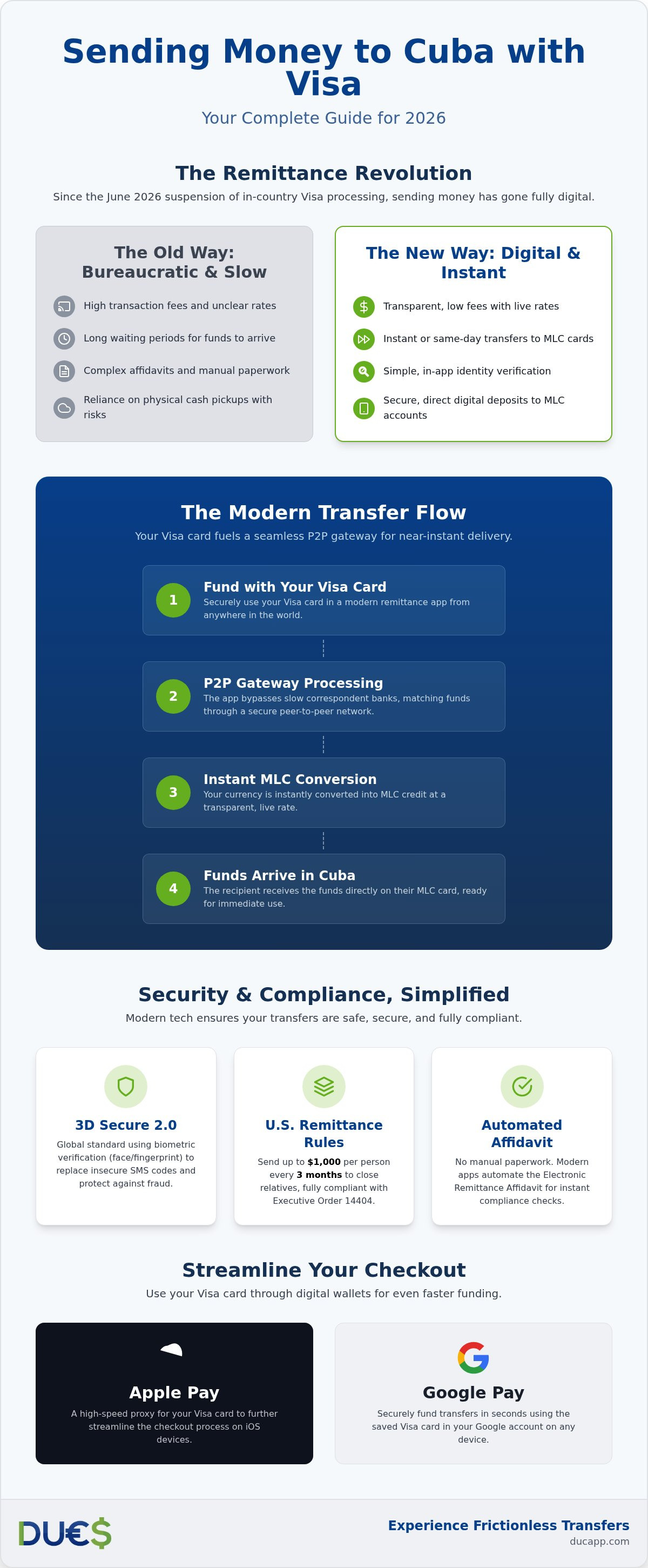
Navigating the laws shouldn't feel like a part-time job. Under Executive Order 14404, issued in May 2026, the U.S. continues to permit family remittances while tightening general sanctions. If you're sending from the States, you're limited to $1,000 per person every three months. This must go to close relatives. The definition of a "Close Relative" is strictly enforced, covering children, parents, siblings, and grandparents. Modern fintech apps now automate the Electronic Remittance Affidavit. You don't need to fill out manual templates or visit a bank branch. The system verifies your relationship and logs the transaction instantly. This automation keeps you compliant without the 20th-century friction. European senders enjoy different limits, but the digital verification remains just as rigorous to ensure security. By automating these checks, you spend less time on paperwork and more time supporting those who matter most.
How Visa Card Transfers Work: Security and Speed
Speed is the new currency in 2026. When you choose to send money to cuba with visa card apps, you're tapping into a hyper-connected digital bridge. The process is straightforward. Your Visa card acts as the secure funding source. Instead of navigating the slow, winding paths of traditional correspondent banking, your funds move through a peer-to-peer (P2P) gateway. This gateway converts your local currency into MLC credit almost instantly. Real-time transaction monitoring tracks every cent from the moment you authorize the payment until it reflects on the recipient's card in Havana. It's a closed-loop system designed for maximum efficiency and zero guesswork.
Security has moved beyond simple passwords. 3D Secure 2.0 is now the global standard for protecting your transfers. This technology replaces clunky SMS codes with biometric verification. Your face or fingerprint now serves as your digital signature. This shift doesn't just stop fraud; it ensures you stay compliant with U.S. Treasury regulations by verifying the sender's identity in real time. If your card is declined, it's rarely a regulatory block. Most often, it's your bank's automated fraud detection being cautious. A quick notification in your banking app or a brief call to your issuer usually clears the path for future frictionless transfers.
The Tech Behind the Transfer
Modern fintech is built on fluidity. P2P gateways act as the connective tissue between your global bank and the Cuban financial system. These gateways bypass the hurdles of traditional banking by matching senders and recipients within a secure network. While currency conversion spreads are a factor in any international move, the best platforms offer transparent, live rates. You see exactly what your family receives before you hit send. In 2026, "instant" is no longer a luxury; it's the baseline. You can experience this streamlined P2P tech and skip the 20th-century banking delays entirely.
Protecting Your Financial Data
Your data safety is non-negotiable. Always look for PCI DSS compliance when selecting a platform. This certification ensures that the app meets the highest global standards for handling cardholder information. There is also a practical difference between using debit and credit cards. Debit cards typically offer the lowest transaction fees for remittances. Credit cards, while sometimes carrying higher fees, often provide an extra layer of purchase protection from your bank. Secure apps never store your sensitive CVV or biometric data on their servers. They use encrypted tokens to keep your financial identity invisible to hackers and third parties alike. This layered approach ensures your peace of mind with every transaction.
Visa vs. Alternatives: Choosing the Best Method
Choosing the right tool matters. When you send money to cuba with visa card platforms, you're opting for a modern, high-tech solution. While Mastercard offers similar global reach, Visa's 2026 digital protocols often result in fewer "flagged" transactions during the funding stage. Traditional bank transfers are quickly becoming a relic. They're slow, expensive, and require a level of formality that doesn't fit a digital lifestyle. Why deal with multi-day delays when you can send funds in a few taps? Recent analysis of U.S. remittance policy confirms that digital channels are the most efficient way to navigate current restrictions. They offer the speed and transparency that old-school banking simply can't match.
Visa vs. Digital Wallets
Apple Pay and Google Pay act as sophisticated proxies for your physical card. They offer a smart way to handle transactions. One-tap transfers remove the friction of manual data entry. Using a digital wallet to send money to cuba with visa card benefits is the ultimate shortcut. By using these wallets, you add a layer of biometric security to your transaction. Your actual card number stays hidden from the remittance platform. This decentralized approach to data is exactly what modern users expect. It's fast. It's private. It's secure. Linking your Visa to a digital wallet ensures that you're always ready to support your family at a moment's notice.
Fee Structures Decoded
Transparency is the foundation of trust. You need to distinguish between "service fees" and "processing fees" to see the full picture. Service fees typically cover the platform's operational costs. Processing fees are what the card networks charge. Don't ignore the exchange rate markup. The value of the MLC credit your recipient receives is what truly counts. In 2026, total fees for these transactions typically average between 10% and 11% of the sent amount. Avoid platforms that hide these costs until the final screen. A reliable guide should show you the exact MLC payout upfront. This clarity allows you to manage your budget and maximize the impact of every dollar you send. It's about getting the most value for your family without the hidden surprises.
Step-by-Step: Using Your Visa Card for Instant Transfers
Moving money shouldn't feel like a marathon. Choosing to send money to cuba with visa card apps is the first step toward reclaiming your time and peace of mind. While legacy providers often force you into long, manual forms and physical branch visits, a tech-forward app handles the entire process on your smartphone. Start by selecting a platform that prioritizes the Cuban corridor. Look for high ratings and a simple interface. Once you've downloaded the app, the registration process is your bridge to speed. Upload a clear photo of your ID. Complete a quick biometric selfie. The system's backend processes your identity in minutes. This is modern compliance at work. It's fast, secure, and entirely paperless.
Preparing Your Recipient Information
Accuracy is your best friend in the digital ecosystem. Cuban banks like BPA (Banco Popular de Ahorro), BANDEC (Banco de Crédito y Comercio), and Banco Metropolitano are the primary destinations for MLC transfers. You'll need the recipient's full legal name exactly as it appears on their bank records. The most critical piece of data is the 16-digit MLC card number. Double-check every digit. In the world of instant transfers, a single typo can lead to irreversible errors. You'll also need the recipient's ID number to satisfy current 2026 regulatory requirements. Gathering this information once allows you to save the recipient profile, making all future transfers a simple one-tap affair.
Finalizing the Transaction
The final click is where the technology truly shines. After you enter the amount and confirm the exchange rate, your smartphone will trigger the 3D Secure verification. Use your FaceID or fingerprint to authorize the payment. This biometric handshake ensures that only you can move your money. Once the transaction is executed, you'll receive a digital receipt instantly. Download it and share it with your family via a messaging app so they can track the arrival on their end. This simple step provides reassurance and transparency for everyone involved.
If your transfer is flagged for "Review", stay calm. This is typically a routine security check by your bank's fraud department or the platform's compliance engine. Most reviews are resolved within a few hours once you confirm the transaction details. If you're ready to bypass the old-school banking hurdles, you can send money to cuba with visa card technology today and experience the speed of a truly frictionless service. Tracking happens in real-time, giving you total visibility from swipe to credit.
Why DUC App is the Smartest Way to Use Visa for Cuba
DUC App isn't just another fintech tool. It's a specialist. While other platforms struggle with the nuances of the Cuban corridor, DUC was built specifically for this mission. It's the most efficient way to send money to cuba with visa card technology. We've removed the bureaucratic friction associated with traditional banking. Our platform offers a seamless integration that turns your Visa card into a high-speed engine for support. You get instant peer-to-peer transfers that land directly in MLC accounts. No more guesswork. No more multi-day waiting periods. It's about empowering you to help those who matter most without the usual stress.
A Unified Financial Ecosystem
Family support is rarely a single transaction. It's a continuous commitment. DUC understands this. We've combined P2P transfers with Cubacel mobile recharges and gift cards in one unified app. You can fund an MLC card and top up a phone in a single session. It's efficient. It's smart. By keeping a digital wallet within the app, you make recurring support frictionless. You won't have to re-enter data every month. Just tap, verify, and send. Our gift cards also serve as a versatile alternative to physical cash. They provide your family with a secure way to access essential goods in the digital economy. It's a complete ecosystem designed for the modern Cuban reality.
The Future of Remittances
Regulations change. Technology evolves. DUC stays ahead of both. We use cutting-edge infrastructure to ensure your transfers remain compliant with the latest 2026 standards. Our interface is designed to be calm and reliable. It moves away from the cold, intimidating feel of old-school bank apps. You'll find a clean, human-centric design that guides you through every step. If you ever have a question, our 24/7 support team is ready to help. Real-time tracking gives you total visibility from the moment you hit send until the funds are credited. You're never in the dark. It's time to move beyond the constraints of traditional systems. Download DUC App and send your first transfer today to experience the future of global remittances.
Master Your Global Transfers with Confidence
The 2026 remittance landscape is defined by speed, transparency, and the removal of obstacles. You've seen how digital MLC cards have replaced slow cash pickups and how biometric 3D Secure 2.0 verification keeps your data invisible to threats. Choosing to send money to cuba with visa card technology means you're no longer bound by the cold, bureaucratic delays of traditional banking systems. You now have the tools to provide instant, secure support from the palm of your hand. It's about empowerment. It's about trust.
It's time to embrace a financial lifestyle that moves at your pace. By leveraging global Visa and Mastercard support and instant P2P transfers, you can ensure your family receives help the moment they need it. DUC App provides the smart, specialized bridge you need to navigate changing regulations with ease. Every transaction is backed by secure 3D verification and real-time tracking for total peace of mind.
Start your secure Visa transfer to Cuba with DUC App and join a modern ecosystem built on trust and efficiency. Your connection to home has never been more reliable or more liberating.
Frequently Asked Questions
Can I send money to Cuba with a Visa debit card from the USA?
Yes, you can fund a transfer using a Visa debit card. While you can't use the card physically inside Cuba due to the June 2026 suspension, you can use it on a digital platform to send money to cuba with visa card funding. This method is fully compliant with current regulations for sending money to close relatives. It's a fast, modern alternative to old-school banking.
How long does it take for money sent via Visa to reach an MLC card?
Transfers are typically instant or completed within the same day. Modern P2P gateways process the funding from your card and credit the recipient's MLC account immediately. This bypasses the traditional 1 to 3 day waiting period. You'll see the status update in real-time on your smartphone. It's a frictionless experience designed for the speed of a digital lifestyle.
Are there limits on how much I can send to Cuba with my Visa card?
Yes, U.S. regulations maintain a limit of $1,000 per person every three months for family remittances. Other countries may have different caps based on local financial laws and platform policies. Always check the current limits within your transfer app before hitting send. These caps ensure your transactions stay compliant while allowing you to provide consistent support to your loved ones.
Is it safe to enter my Visa card details into a money transfer app?
It is safe if the app uses 3D Secure 2.0 and maintains PCI DSS compliance. These protocols ensure your card data is encrypted and never stored on vulnerable servers. Using a specialized app to send money to cuba with visa card security features provides more protection than traditional methods. Biometric verification adds a vital layer of digital defense for every transaction.
What Cuban banks accept international Visa transfers in 2026?
BPA (Banco Popular de Ahorro), BANDEC (Banco de Crédito y Comercio), and Banco Metropolitano all accept these digital transfers. While these banks don't process physical Visa cards at ATMs, they receive the digital credits funded by your international card. Ensure you have the correct 16-digit MLC card number for the recipient. This accuracy ensures the funds land in the right account instantly.
What happens if my Visa transfer to Cuba is declined?
Most declines happen because your bank's fraud detection system is being cautious. You'll usually receive a notification to authorize the transaction. If it's not a bank block, check your balance or ensure your identity verification is up to date in the app. A quick authorization usually resolves the issue and allows the transfer to proceed without further stress or delay.
Do I need to provide a relative’s blood relation proof for Visa transfers?
You don't need to upload physical documents like birth certificates for every transfer. Instead, you must sign a digital Electronic Remittance Affidavit. This document self-certifies that the recipient is a close relative. Modern apps automate this process during the transaction flow. This keeps you compliant with U.S. Treasury rules without the need for complex or manual paperwork.
Can I use a Visa gift card to send money to Cuba?
Most remittance platforms require a registered debit or credit card linked to a verified bank account. Pre-paid Visa gift cards often lack the 3D Secure verification needed for international transfers. For the best results, use a standard Visa debit card. This ensures your identity is verified and the transaction meets global security standards. It's the most reliable way to guarantee your funds arrive.


