

What if you could bypass the bureaucratic maze and send money to Cuba with a visa card as easily as ordering a coffee? It's 2026. Traditional banking still treats international remittances like a slow-motion puzzle. You're likely tired of the high transaction fees. You're done with the nail-biting wait for MLC cards to reflect a balance. We agree that supporting your family shouldn't feel like a stressful exercise in paperwork. It's time for a faster, more liberating way to handle your finances. You deserve a solution that respects your time and your lifestyle.
This digital guide reveals the most secure pathways to move your funds while managing the March 2026 BIS rules. You'll learn how to achieve instant or same-day transfers to MLC cards with low, transparent fees. We're stripping away the complexity. We're showing you a frictionless, app-based approach that puts you back in control. We'll break down the best fintech tools available. We'll explain how to move money without the typical banking headaches. Here's your roadmap to modern, borderless support that feels as seamless as a local transaction.
Key Takeaways
- Master the 2026 regulatory shift from physical cash to digital MLC card top-ups for faster, more reliable transfers.
- Discover the exact steps to send money to cuba with visa card using modern fintech apps that bypass traditional banking hurdles.
- Protect your transactions with advanced 3D Secure 2.0 biometric verification for total peace of mind during every transfer.
- Compare Visa performance against Mastercard and digital proxies like Apple Pay to find your fastest route to the island.
- Skip the complex paperwork and high fees by using specialized P2P platforms designed for instant, frictionless delivery.
Sending Money to Cuba with Visa: The 2026 Landscape
The era of waiting in dusty queues for physical cash pickups has vanished. By 2026, the financial bridge to the island has shifted entirely to the cloud. You want to send money to cuba with visa card because it’s the most direct route to your loved ones’ wallets. It’s about speed. It’s about reliability. Visa remains the global standard for these transactions. It offers a layer of fraud protection that decentralized options or physical cash simply can’t match. Modern senders prioritize this security above all else. They want a transaction that feels like a local payment, not a complex international mission.
Digital vs. Physical Remittances
Physical cash delivery is becoming a relic of the past. Today, MLC (Freely Convertible Currency) cards are the heartbeat of the Cuban economy. These digital accounts allow recipients to shop at specialized stores and access essential services. They bypass the volatility of physical currency. When you choose to send money to cuba with visa card, you’re feeding this digital ecosystem directly. It’s faster. It’s safer. You avoid the logistical nightmares of home delivery and the high fees associated with moving physical currency across borders. Digital transfers provide an audit trail that gives you peace of mind. Your money doesn't get lost in transit. It lands exactly where it belongs, often within hours.
The Legal Framework for Visa Transfers
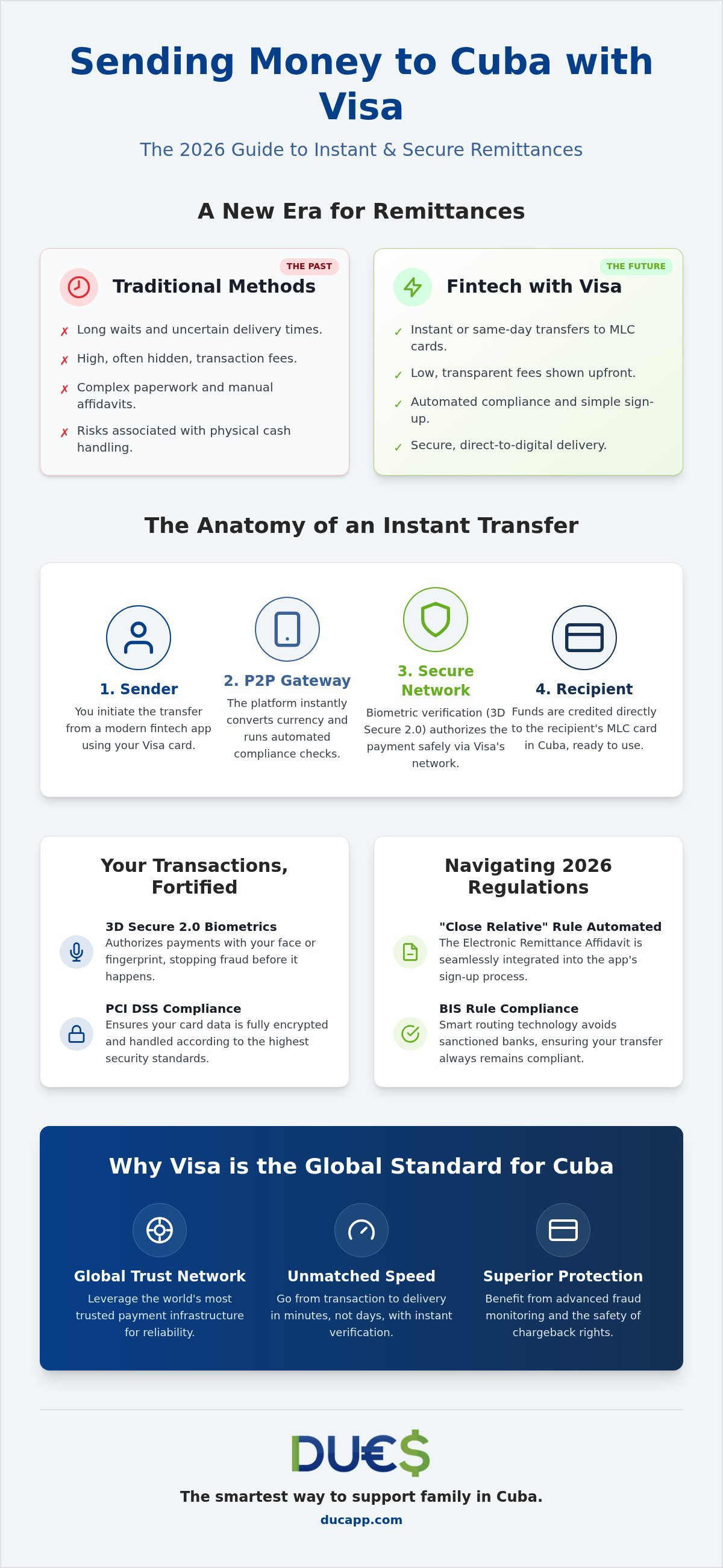
Regulations haven't disappeared; they've just gone digital. The History of U.S. Remittances to Cuba shows a long path of shifting policies and complex hurdles. As of August 2026, the focus remains on the "Close Relative" rule. This legal definition ensures your support reaches family members rather than prohibited government officials or members of the Communist Party. While older services force you to fill out manual, 20th-century affidavits, modern fintech platforms automate this entire process. They integrate the Electronic Remittance Affidavit into the sign-up flow. You don't have to be a legal expert to stay compliant. The March 2026 BIS rules are strict about avoiding sanctioned Cuban-owned banks, but your Visa card, paired with a smart app, navigates these hurdles effortlessly. You stay within the law without the headache of bureaucratic paperwork.
Why Visa Wins in 2026
Visa isn't just a card; it's a global trust network. In the high-risk environment of Cuban remittances, this trust is your greatest asset. Traditional banks might block your transfer due to outdated risk assessments. Specialized fintech apps use the Visa infrastructure to provide a frictionless experience. You get the benefit of real-time exchange rates and instant verification. This removes the guesswork from your support. You know exactly how much MLC will arrive. You know exactly when it will be available. It’s a transparent, tech-forward solution for a modern world.
How Visa Card Transfers Work: Security and Speed
Modern transfers are sophisticated. When you send money to cuba with visa card, the process triggers a series of high-speed digital checks. It starts with your card issuer and ends with a credit to an MLC card. This isn't a manual bank wire; it's a synchronized exchange between international P2P gateways and local Cuban nodes. The system verifies your identity, checks for regulatory compliance, and secures the funds in milliseconds. It's banking speed designed for a digital lifestyle. You no longer have to wonder if your money will arrive. You can track it every step of the way.
The Tech Behind the Transfer
2026 technology has redefined "instant." P2P gateways act as translators between global banking protocols and Cuban debit systems. These platforms manage currency conversion spreads in real-time. You see the final MLC amount before you confirm the swipe. This transparency is vital given the complex U.S. Policy on Remittances to Cuba. The March 4, 2026 BIS rule restricts transfers into Cuban-owned banks, so these gateways route through non-sanctioned channels. It’s a seamless way to send MLC credit instantly without worrying about the backend complexity. You get the speed you need without the traditional banking friction.
Protecting Your Financial Data
Security in 2026 is biometric. 3D Secure 2.0 is the new standard. It uses facial recognition or fingerprint scans from your smartphone to authorize the transaction. This stops unauthorized swipes instantly. PCI DSS compliance ensures your card data is encrypted; it's never stored on vulnerable servers. Debit cards offer immediate settlement, while credit cards provide an extra layer of fraud protection through chargeback rights. Knowing your platform uses these protocols is essential for your peace of mind. Look for the padlock icon and biometric prompts. These are the hallmarks of a secure, modern remittance app. Your data stays private. Your funds stay safe. Every transaction is monitored in real-time to prevent fraud before it happens.
Sometimes, a Visa card might be declined. This usually happens because of a bank’s internal "high-risk" flag or a lack of international travel notices. You can avoid this by using an app that uses encrypted merchant codes. It keeps your transaction clean. It ensures your support reaches its destination without a hitch. Modern fintech has solved the old problems of cross-border transfers. You just need the right tool to bridge the gap. By choosing a platform that prioritizes these 2026 security standards, you protect your family and your finances simultaneously.
Visa vs. Alternatives: Choosing the Best Method
Choice defines your experience. While you have several options to move funds, not all paths offer the same efficiency. When you choose to send money to cuba with visa card, you're tapping into a network optimized for high-speed verification. Mastercard is a reliable alternative, but Visa often enjoys broader acceptance across the specialized P2P apps that dominate the 2026 market. Traditional bank transfers have fallen behind. They feel like a relic of a slower era. They are plagued by manual checks, high flat fees, and 3-5 day waiting periods that don't fit a digital-first lifestyle.
- Visa: Highest acceptance rates and robust fraud protection.
- Mastercard: Excellent secondary option with competitive conversion rates.
- Digital Wallets: The fastest way to authorize payments without re-entering data.
- Bank Wires: Slow, expensive, and increasingly incompatible with MLC accounts.
Visa vs. Digital Wallets
Apple Pay and Google Pay have changed the game. They act as secure proxies for your physical card. By linking your Visa to a mobile wallet, you gain a layer of privacy that direct card entry lacks. The app never sees your full card number. It’s a one-tap authorization that uses your phone's biometrics. This isn't just about convenience; it's about bypassing the friction of manual verification. In the fast-paced world of 2026 remittances, these digital proxies are the preferred choice for those who value both security and speed. They make the process feel like a seamless part of your daily routine.
Fee Structures Decoded
Don't let the "zero fee" headlines fool you. You must understand the difference between service fees and exchange rate markups. Some platforms offer low upfront costs but hide their profit in the conversion from USD to MLC. Always look at the final credit your recipient receives. It’s essential to verify that your provider complies with the U.S. Treasury's Cuba Sanctions regulations to avoid frozen funds or legal complications. Industry data indicates that the average total cost for a digital card-based transfer typically falls between 3% and 7% of the transaction value. Smart senders prioritize apps that offer a simple, app-based user experience with no hidden processing fees at the final step. You want a clear breakdown before you commit your funds.
Step-by-Step: Using Your Visa Card for Instant Transfers
You've decided to send money to cuba with visa card because you value efficiency over red tape. The process starts by choosing a verified fintech platform that understands the 2026 landscape. Forget the cumbersome forms and physical queues of the past. Modern apps use a streamlined Know Your Customer (KYC) process that respects your time. You'll need a valid ID and a smartphone. The app verifies your identity in minutes. This isn't just a regulatory hurdle; it's your primary shield against fraud. Once your account is active, you're ready to bridge the gap between your bank and your family's MLC card.
Preparing Your Recipient Information
Accuracy is your best friend. Cuban banks like BPA (Banco Popular de Ahorro), BANDEC (Banco de Crédito y Comercio), and Banco Metropolitano are the primary destinations for MLC transfers. You'll need the 16-digit MLC card number. Double-check every digit; digital transactions are often irreversible. Collect the recipient's full legal name and ID number. This data ensures compliance with the "Close Relative" regulations we analyzed earlier. Having this information ready makes the entire experience frictionless. It ensures your support reaches the right person without delays.
Finalizing the Transaction
The final swipe is where modern tech truly shines. Your smartphone will prompt a 3D Secure 2.0 verification. Use your face or fingerprint to authorize the payment. It's instant. Once the transaction is successful, download your digital receipt immediately. Share it with your family via your favorite messaging app so they can see the funds are on the way. If your transfer is flagged for "Review," stay calm. This usually means a standard manual check is needed to satisfy 2026 compliance standards. Most reviews clear within an hour. You can track every update in real-time through the app's dashboard. It's a transparent, guided journey from start to finish.
Ready to move your funds? You can start your first MLC transfer today and see how simple 2026 remittances can be. By following these steps, you avoid the high fees and slow delivery times of traditional banking. You get a secure, app-based experience that puts you in total control. It's the smartest way to support your loved ones from anywhere in the world. Your Visa card is the key; the right app is the engine.
Why DUC App is the Smartest Way to Use Visa for Cuba
DUC App isn't a generalist platform. It's a specialized tool designed specifically for the Cuban remittance corridor. When you choose to send money to cuba with visa card, you need an engine that understands the nuances of the local digital economy. We've built a bridge that bypasses the cold, bureaucratic hurdles of traditional banking. It feels liberating. You're in control. The interface is clean and the process is rapid. It's the smart companion you've been looking for. We've replaced the stress of international wires with a simple, high-tech solution that works.
Our frictionless Visa integration allows for instant peer-to-peer transfers. You don't have to worry about the backend complexity or the risk of blocked transactions. We handle the high-speed verification and regulatory checks in the background. You just swipe and send. It's that simple. We've prioritized a mobile-first experience because we know you're managing your life on the go. You can send money to cuba with visa card while waiting for a flight or during a lunch break. It's efficient support for a modern lifestyle.
A Unified Financial Ecosystem
DUC goes beyond simple transfers. It's a complete toolkit for family support. You can handle P2P transfers and Cubacel top-ups in the same session. There's no need to switch between different apps or re-verify your identity for every service. The digital wallet feature allows you to manage recurring family support with a single tap. It keeps your financial life organized. If you want a versatile alternative to MLC credits, our gift cards are the perfect solution. They provide your family with immediate purchasing power for essential goods while maintaining your financial privacy. Everything you need is in one place.
The Future of Remittances
The 2026 regulatory environment is fluid and complex. DUC uses advanced technology to stay ahead of these changes. We monitor every shift in international law to ensure your transactions remain secure and compliant. You get a calm, reliable experience every time you log in. Real-time tracking means you never have to guess the status of your funds. You'll receive instant notifications the moment the MLC card is credited. Our support team is available 24/7 to answer your questions and provide peace of mind. We're here to guide you through every step. It's time to move past the constraints of traditional systems.
Download DUC App and send your first transfer today.
Empowering Your Connection to Cuba
Financial borders are fading. You've seen how the 2026 landscape has traded slow cash pickups for instant MLC card top-ups. By choosing to send money to cuba with visa card, you're embracing a faster, more secure way to support your loved ones. You now have the roadmap to navigate regulations and utilize biometric security for total peace of mind. It's about more than just moving money; it's about reliable, frictionless support that fits your digital lifestyle.
We've stripped away the complexity. You can focus on what matters. Whether you're sending MLC credit or a quick mobile recharge, the technology is here to work for you. Don't let high fees or delayed delivery times hold you back. You have the tools. You have the knowledge. You have the power to make a difference in minutes.
Start your secure Visa transfer to Cuba with DUC App. Experience global Visa and Mastercard support, instant P2P transfers, and secure 3D verification today. Your family is waiting. The future of remittances is already in your hands.
Frequently Asked Questions
Can I send money to Cuba with a Visa debit card from the USA?
Yes, you can send money to cuba with visa card debit card from the U.S. using specialized fintech platforms. While traditional banks block direct wires, modern apps navigate OFAC regulations for you. You must ensure the recipient isn't a prohibited official. The process is entirely digital. It bypasses the old banking friction. You simply link your debit card and authorize the transfer through a secure, app-based interface.
How long does it take for money sent via Visa to reach an MLC card?
Delivery times vary depending on the platform and the recipient's bank. While the app processes your payment instantly, funds typically reach an MLC card within 24 to 48 hours. Some transactions settle even faster during business days. You should avoid expecting true real-time arrival every time. Factors like Cuban bank processing hours and network stability impact the final delivery. Always track your progress in the app dashboard.
Are there limits on how much I can send to Cuba with my Visa card?
U.S. regulations do not currently set a national dollar limit on family remittances. However, individual service providers impose their own ceilings to manage risk and ensure platform stability. Most fintech apps set daily or monthly caps based on your account verification level. You can often increase these limits by providing additional KYC documentation. Check your app's specific settings for current thresholds. These limits help maintain a secure environment for all digital transactions.
Is it safe to enter my Visa card details into a money transfer app?
It is safe if the platform utilizes modern encryption and 3D Secure 2.0 protocols. These systems use biometric verification to ensure you're the one authorizing the swipe. Your card data is never stored in a way that's accessible to unauthorized parties. Look for PCI DSS compliance badges. These certifications prove the app meets global security standards. Using a digital wallet like Apple Pay adds an extra layer of privacy for your card details.
What Cuban banks accept international Visa transfers in 2026?
The primary Cuban banks accepting these digital credits are BPA, BANDEC, and Banco Metropolitano. These institutions manage the MLC card accounts used for local commerce. You'll need the recipient's 16-digit card number and their full legal name. Ensure the bank is not on the Restricted List. Most modern P2P apps automatically filter these destinations for you. This prevents you from accidentally sending funds to a prohibited institution or sanctioned entity.
What happens if my Visa transfer to Cuba is declined?
A declined transaction usually stems from your bank's internal security filters. Many banks flag international transfers to certain regions as high-risk by default. You can often resolve this by calling your card issuer to authorize the payment. Alternatively, check if you've enabled international transactions in your banking app. If the decline happens within the transfer app, it may be a compliance flag. Contact the app's support team to clear any verification hurdles.
Do I need to provide a relative’s blood relation proof for Visa transfers?
You don't need to upload birth certificates or physical proof of ancestry. However, you must complete an Electronic Remittance Affidavit. This is a simple, automated step within the app. You're legally certifying that the recipient meets the Close Relative definition under U.S. law. This includes parents, siblings, children, and cousins. Modern fintech makes this compliance step frictionless. It's a quick declaration that keeps your transaction within legal boundaries.
Can I use a Visa gift card to send money to Cuba?
Most prepaid Visa gift cards won't work for international transfers to Cuba. These cards are typically restricted to domestic U.S. transactions only. They also lack the 3D Secure 2.0 biometric verification required by secure P2P gateways. To send money to cuba with visa card, you should use a standard debit or credit card issued by a bank. This ensures your payment can pass through the necessary security and compliance layers without being blocked.


