

Sending mobile credit across borders should be straightforward. An international mobile top up service lets you recharge someone else’s phone from abroad, but available destinations, mobile services, and payment methods depend on the service.
That variation is exactly what makes a little preparation useful. You want to send credit to the right number, choose a recharge that works for the recipient, and understand how payment and confirmation fit into the process. This guide explains the steps for topping up another person’s phone, what to look for when checking country and carrier support, and how to review accepted payment methods before completing a transaction. It also covers international airtime top-ups, including why options such as scheduled or recurring recharges can depend on the destination and other requirements. Get the practical details, then choose the approach that fits your recipient.
Key Takeaways
- Enter the recipient’s mobile details carefully and look for a transaction confirmation after the recharge.
- Choose the destination country first, then select a supported carrier and suitable top-up pack.
- Review the payment methods available for your transaction before completing the recharge.
- Find out what can affect scheduled or recurring airtime top-ups, and when e-commerce API integration may fit your needs.
How to top up someone else's phone?
Choose the recipient’s destination, enter their mobile number, then select an available recharge. The final confirmation helps you track the transaction.
In the US, refund options and consumer protections can depend on the payment method, transaction terms, and reason for a dispute. Keep your receipt and confirmation details if you need to document a billing concern or refund request.
International Recharge Process
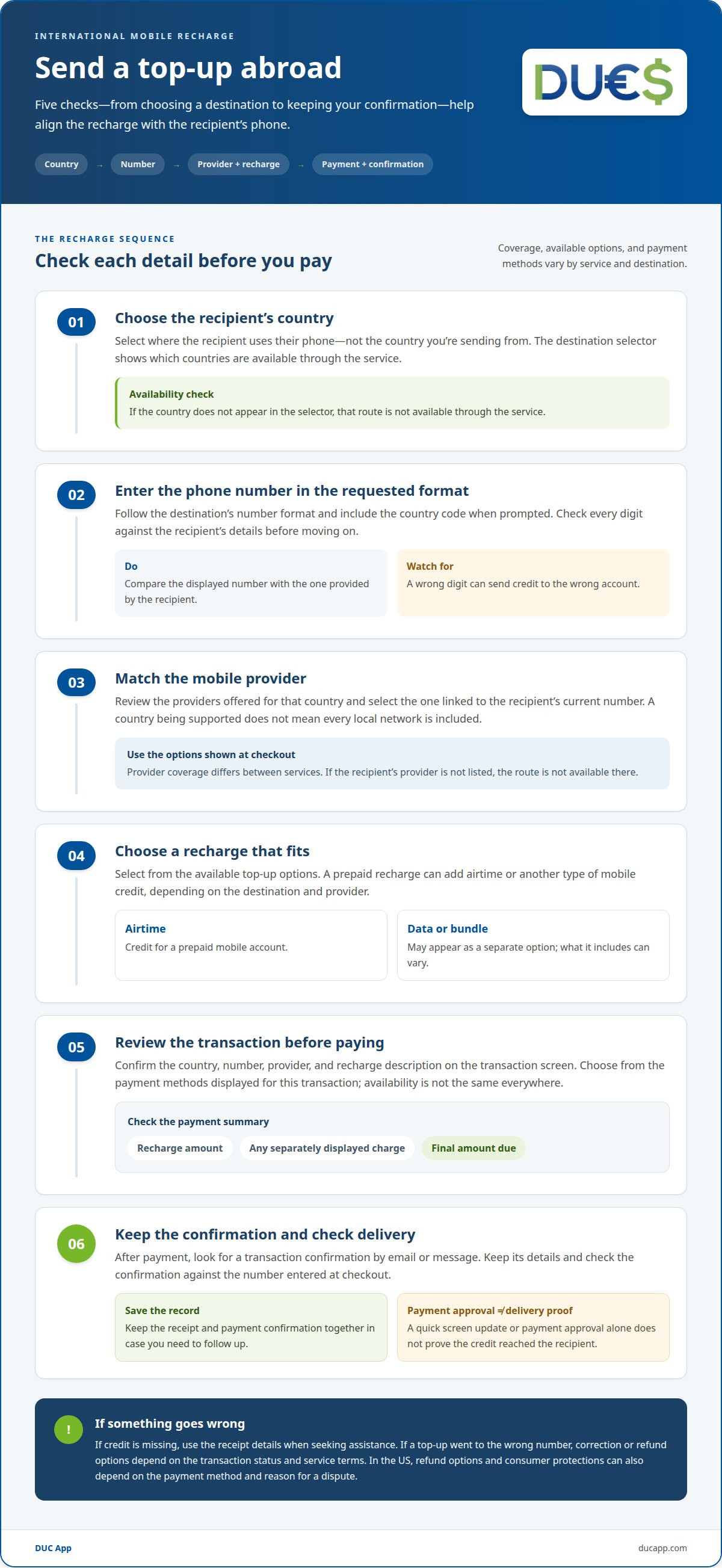
For an international mobile recharge, start with the recipient’s country and phone number. Then choose an available mobile provider and top-up option. Check the number and selection before paying: a wrong digit or provider can send credit to the wrong account. You pay from abroad, and the recharge is intended for the recipient’s mobile account.
Prepaid Mobile Recharges
A prepaid recharge adds airtime or another available type of mobile credit to a prepaid account. It can help when someone else pays for a phone but the recipient needs credit. Choose an option suited to their needs, and distinguish airtime from any data or bundled option shown. What each option includes can vary by destination and mobile provider.
Sending Recharges from Abroad
To send a mobile recharge from abroad, select the recipient’s country from the available destinations, enter their phone number, and choose an available provider and recharge option. Coverage depends on the service, so international access doesn’t mean every country or network is supported. Follow the country code and number format shown for the destination before submitting payment.
Transaction Confirmations
After payment, look for a transaction confirmation by email or message. Keep its details in case you need to follow up. A screen may update quickly, but speed alone doesn’t prove the recharge reached the recipient. Check the confirmation against the number you entered at checkout.
What countries and mobile carriers allow reloads?
Destinations and mobile providers vary by service, so use the options shown during checkout. From the United States, you can make an international top-up when the destination and recharge are available. If a top-up goes to the wrong number, the credit may reach that account; correction or refund options depend on the transaction status and service terms. If it isn’t delivered, keep the receipt and use its details when requesting assistance.
Supported Countries and Operators
Use the destination selector to see which countries are currently supported. Select the recipient’s country and review the mobile providers offered there. Coverage in a country doesn’t necessarily include every local network, so check the provider list as well.
Check the recipient’s current mobile provider before choosing. A familiar brand or previously used carrier may not match the provider linked to their number now. Coverage differs between services, so don’t assume a country or network is supported simply because international recharges are available. The destination and provider options determine whether you can proceed.
This step connects the sender’s location with the recipient’s destination. A person in the United States can select an eligible country abroad, then choose among the operators displayed for it. That helps loved ones stay connected, while keeping the selection grounded in the networks actually offered for that route.
Country and Provider Selection
Select the country where the recipient uses their phone, not the country you’re sending from. Enter their number in the requested format, including the destination code when prompted. Choose the matching provider and review the available recharge options. This aligns the country, number, network, and recharge before payment.
Before submitting, compare the displayed number and provider with the recipient’s details. Don’t rely on memory: the number may be active on a different network than you expect. Review the recharge description too, since airtime and data options may appear separately. Choose the option that suits the recipient, then confirm the full selection on the transaction screen.
If the recipient’s country or provider doesn’t appear in the selector, that route isn’t available through the service. Use the displayed options as the guide to supported destinations and mobile providers.
Accepted payment methods
Payment options appear during checkout, before you submit a mobile recharge. Choose from the methods shown for your transaction rather than assuming every method is available worldwide. If a credit or debit card is listed, enter its details in the designated fields and review the displayed total before authorizing payment.
To recharge online, select the destination, mobile operator, and top-up pack first. Then choose an available payment method and check the transaction summary. Look for the recharge amount, any separately displayed charge, and the final amount due. This lets you see the cost components before completing the transaction, without relying on an estimate from another route or payment method.
Payment timing can depend on both the payment process and the mobile recharge. A payment approval does not by itself confirm that airtime reached the recipient. Keep the transaction receipt and any email payment confirmation together. If the recipient says the credit hasn’t appeared, those details can help identify the purchase and distinguish a payment issue from a delivery delay.
To reduce scam and security risks, use the payment flow presented for your transaction. Never send card details in an unsolicited message or to an unfamiliar recipient. Check the recipient’s number and the payment total before authorizing. Treat an unexpected request for extra payment as a reason to pause and review the transaction record.
The payment method can affect how you follow up on a transaction. Different options may have different confirmation steps, records, or dispute processes. Save your receipt, note the selected method, and use the transaction details when seeking help. If the screen seems slow, check whether the payment is completed or pending before trying to pay again.
Before confirming, review the recipient’s number, destination, selected recharge, payment method, and displayed total. This helps catch mismatched details before submission. Once the payment is approved, keep the confirmation so you can refer to the transaction if questions arise.
International mobile airtime top-ups
International airtime top-ups send mobile credit to a recipient in another country. Decide whether they need flexible airtime or a specific option, such as a data bundle. The destination and available recharges determine what you can send.
Airtime may suit someone who needs calling credit, while a bundle may be better for a specific service. The options aren’t interchangeable: the recipient’s mobile provider determines how each recharge can be used. Match the recharge to the recipient’s stated need rather than assuming every option includes minutes, data, or both. For international travelers who primarily need data access abroad, specialized eSIM services like GoFlex can be a convenient alternative to carrier top-ups.
Sending a top-up from abroad depends on the destination route. Country coverage, the recipient’s mobile provider, and available recharge options determine what you can send. A route may offer airtime without every bundle, so use the choices displayed for that country and provider.
Recurring or scheduled recharges aren’t available on identical terms everywhere. Whether they can be arranged depends on factors such as destination country, currency availability, regulatory issues, and identification requirements. These conditions can shape the available process, so a one-time recharge may be the practical choice when a recurring option isn’t offered for the route.
Consider how the recipient uses their phone before choosing. If they mainly make calls, airtime may suit them better than a data-focused option. If they need a particular bundle, select it only when it appears for their destination and provider. This helps match the recharge to the service they intend to use.
For a one-time send, review the country, operator, and recharge type together before confirming. For a repeating need, first look at whether scheduling is available on that route and what requirements apply. Send an international mobile recharge when you’re ready to top up someone abroad.
DUC App: Api integration for e-commerces
DUC App offers international recharges and API integration for e-commerce. For a business that wants to add mobile top-ups to its online offering, API integration connects its use case with DUC App’s recharge service.
API integration suits e-commerce businesses, not someone simply sending a one-time top-up to a friend or family member. DUC App also offers peer-to-peer transfers and gift cards for different needs. Choose the service that matches your transaction, whether you’re sending a recharge or integrating recharge functionality into an e-commerce experience.
Contact DUC App to discuss API integration for your e-commerce business.
Choose the next step for staying connected
Choose your next step based on how you want to support people abroad. For a personal recharge, focus on the recipient’s immediate mobile needs. For an e-commerce business, consider whether recharge functionality fits your customer experience. An international mobile top-up service can support cross-border transactions, but the right option depends on who will use it and why.
Keep the purpose clear: a one-time personal top-up and an e-commerce integration serve different needs. DUC App also offers peer-to-peer transfers and gift cards when a mobile recharge isn’t the right fit.
If you’d like to explore mobile top-up support for your needs, contact DUC App for mobile top-up help. Take the next step when you’re ready to make staying connected easier for someone abroad.
Frequently Asked Questions
Have more questions about mobile recharges?
If your situation doesn’t fit a standard recharge, note the destination, provider, whether the line is prepaid, and the type of credit needed. For a submitted transaction, keep the reference and payment record together. These details can help identify whether the issue relates to coverage, recipient information, payment status, or recharge type.
Can I also send data?
Can I schedule a mobile reload in advance, or set up recurring reloads?
Scheduled or recurring recharges depend on the destination, currency availability, regulatory requirements, and identification requirements. An option available for one route may not apply to another. Plan for the recipient’s destination instead of assuming a fixed schedule works everywhere. For a specific occasion, arrange a separate recharge that suits the recipient’s needs.
How do I find out if the mobile reload I sent was successful?
A successful top-up may be confirmed by email or message with transaction details. Check the inbox associated with the transaction, including filtered messages, and keep the confirmation for reference. The recipient can also check their mobile account for the credit. If the confirmation and account status don’t match, use the transaction reference to identify the recharge.
How long does it take to get airtime?
Delivery timing depends on the transaction and the recipient’s destination network. Payment approval and airtime delivery are separate steps, so a completed payment doesn’t necessarily mean the credit has reached the phone. Check the transaction notice and the recipient’s account balance. If the credit hasn’t appeared, compare the submitted details with the receipt.
How to get instant mobile top up worldwide?
An international mobile top-up service lets you recharge a phone by selecting an available destination and provider, entering the recipient’s number, choosing a recharge, and completing payment. Have the country and number details ready to avoid interruptions at checkout. Review the transaction notice and recipient’s account separately, because payment approval and airtime delivery are distinct steps.


