

A gift card is only one part of the system. A gift card API connects your platform to a digital gift card catalog and automates the information exchange needed to issue rewards. Global digital gift card solutions built around an API can bring catalog selection, order processing, and digital delivery into an existing customer or rewards journey.
That connection can make rewards easier to manage, but international delivery involves decisions beyond integration. The catalog needs to suit recipients, and coverage and redemption options can differ by market.
This guide explains what a gift card API does and how it fits into an ecommerce or rewards workflow. Learn how to assess a catalog, understand international coverage and delivery, and plan an integration that supports the experience you want to create. Making clear decisions up front helps smooth the path from reward selection to delivery.
Key Takeaways
- Understand how a gift card API connects a digital catalog with reward ordering and delivery.
- Choose a catalog by considering recipient preferences, brand relevance, and the markets you serve.
- Plan international rewards around local availability, redemption, and delivery requirements.
- See how an ecommerce API integration can connect gift cards with an existing customer journey.
What is a gift card API?
A gift card API connects a business platform to the systems that process gift card orders. It can support catalog selection, bulk distribution, and reward delivery within an existing digital workflow.
International Digital and Physical Distribution
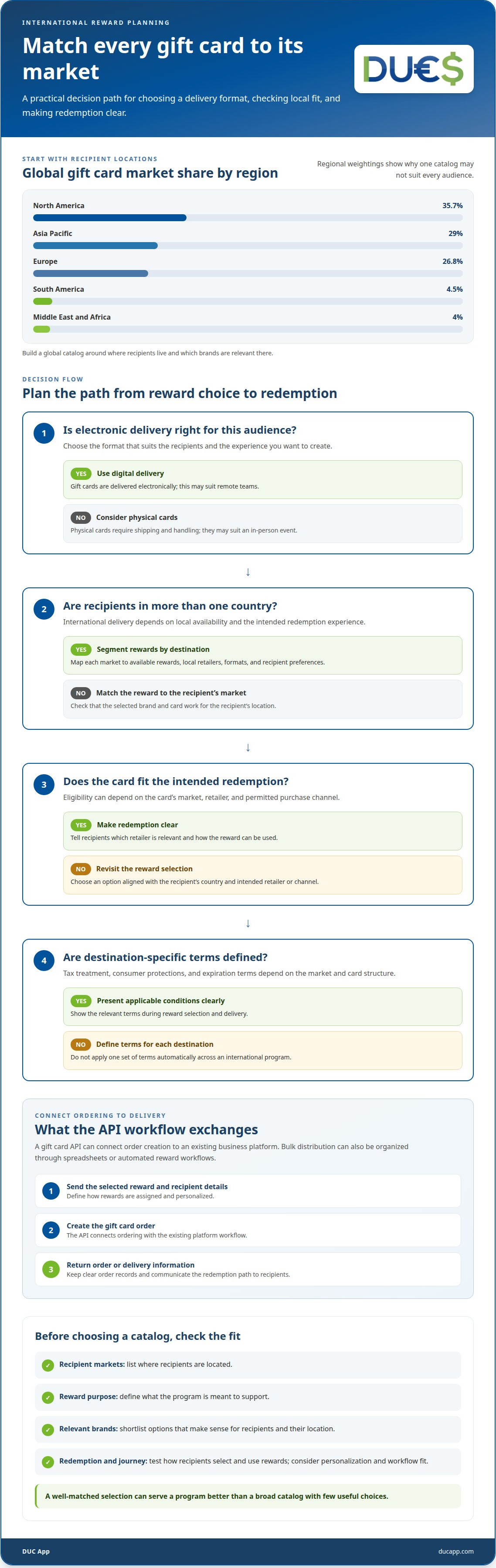
International distribution means matching each reward to the recipient’s country and intended redemption experience. Digital gift cards are delivered electronically, while physical cards require shipping and handling. For example, a company rewarding remote teams may prefer digital delivery, while an in-person event may use physical cards. Choose a format that suits your audience, then align country coverage and redemption options with that choice.
Regional market shares show why one catalog may not suit every audience. North America accounted for 35.7% of the global gift card market, Europe 26.8%, Asia Pacific 29%, South America 4.5%, and the Middle East and Africa 4%. These figures point to different regional weightings, so build a global catalog around where recipients live and which brands are relevant there.
For bulk distribution, businesses can use spreadsheets, APIs, or automated reward workflows. A spreadsheet can organize recipient and reward details for a campaign; an API can connect order creation to an existing platform. In either case, define how rewards are assigned, personalized, and delivered. Then consider redemption: recipients need a clear path from receiving a digital code to using it with the selected brand.
Integration, Payments, and Program Risks
Integration links a business system to gift card ordering and delivery. A typical flow sends the selected reward and recipient details, then returns order or delivery information to the business platform. Global distribution also depends on country coverage and redemption options. Payment and payout methods vary by platform and destination, so assess how purchases are funded and how recipients can redeem rewards.
Platform charges depend on catalog access, integration scope, fulfillment, and order volume; pricing is provided after a quote request. Fees and discounts vary, so assess total program costs for ordering, delivery, and API use.
Common program risks include unauthorized purchases, exposed gift card codes, and delivery to the wrong recipient. Use controlled access, handle recipient data carefully, and keep clear order records to reduce operational gaps. Compliance considerations also vary by market and program design.
Gift card catalog size and brand choice
A large catalog offers choice, but its headline size doesn’t show whether rewards suit your recipients. Assess coverage by market, brand relevance, and redemption fit. For example, a catalog for employees in several countries should include options that make sense in each recipient’s location, not just a long list.
Choose a global gift card provider by matching recipient locations and reward goals to its catalog. Assess relevant brands, redemption options, personalization, and how catalog access fits your workflow. A smaller, well-matched selection can serve a recognition program better than a broad catalog with few useful choices.
Start by defining the purpose of each gift card program. Customer thank-you gifts may call for familiar retail or entertainment brands; employee recognition may benefit from choices for different interests. Group brands into useful categories, such as dining, shopping, and digital services. This helps recipients navigate their options without facing an undifferentiated list.
Brand and influencer partnerships can shape a campaign around a shared audience or launch. For example, a creator-led promotion might feature a relevant brand as a reward. Keep the partnership aligned with the program’s purpose and audience. The reward should feel like a natural part of the experience, not an unrelated promotion.
Branding and customization add context to a reward. A business can tailor the message, campaign identity, and recipient communication for occasions such as a milestone or seasonal recognition. Keep the gift card brand clear, too. The sender’s personalized message explains why the recipient is receiving it; the selected brand shows where it can be redeemed.
Before choosing, use a simple review: list recipient markets, define the reward purpose, shortlist relevant brands, and test how recipients will select and redeem them. Then consider how partners support the catalog and whether the recipient journey feels seamless. For a closer look at digital gift card options, explore the available offering.
International reward coverage and delivery
International reward programs need a clear path from selection to redemption. For an employee in one country and a retailer in another, market coverage and card terms shape the experience.
Redemption Across Countries
Redemption depends on the card’s eligible market, retailer, and permitted purchase channel. A card intended for one country may not work with the same retailer in another, even if the brand is familiar. Match each reward to the recipient’s location, then explain where and how it can be redeemed.
For a team spread across countries, segment rewards by destination rather than sending everyone the same option. Make the recipient message clear about the relevant retailer and redemption steps. This helps employees understand what their incentive covers before trying to use it.
Markets, Taxes, and Consumer Rules
Tax treatment, consumer protections, and expiration terms depend on the market and the card’s structure. There is no single set of terms to apply automatically across an international program. Define destination-specific card terms and present the applicable conditions clearly during reward selection and delivery.
Market planning also means considering local retailers, available card formats, and recipient preferences. For example, a prepaid card may offer more spending choice than a retailer-specific reward, while a retailer card can feel more tailored. Choose based on the program’s purpose and intended redemption experience.
Before launch, map each destination market to its available rewards and delivery route. Separate digital delivery from physical fulfillment: an email-based reward avoids shipping, while a physical card requires a delivery address and logistics. This distinction matters for distributed employees and cross-border incentive programs.
Delivery details affect engagement. A digital reward should arrive with enough context for recipients to understand its value and how to redeem it. For a physical card, coordinate recipient details and destination with the campaign schedule. In either case, align the message, reward, and delivery method with the recognition moment.
Keep a destination matrix for each program: market, retailer, card format, redemption terms, and delivery method. Use it to assign rewards consistently and identify gaps before distribution. This structured view makes international coverage easier to manage without assuming one card works everywhere.
Gift card API integrations
An API integration connects an ecommerce platform with gift card ordering in its existing customer journey. For example, a shopper might select a gift card at checkout, while a corporate team might issue rewards from an internal portal. The integration links the business system to catalog and order functions, reducing manual handoffs between workflows.
Map the journey before building it. Identify where a recipient or customer selects a reward, what details the order requires, and where the result appears. A typical flow sends the chosen card and recipient information, then receives an order status or delivery result. Keep customer-facing steps simple, even when the backend coordinates several systems.
Plan for exceptions as well as successful orders. If a selection is unavailable or an order fails, the platform needs a clear response, such as offering another choice or letting the user retry. Record each transaction against the relevant customer or campaign. These records help teams reconcile orders and resolve recipient questions without searching across disconnected tools.
For loyalty programs, an integration can connect a purchase or milestone to a reward-selection step. A corporate recognition platform might trigger a gift card after an employee achievement. Across countries, the workflow also needs to present choices suited to each recipient’s market. Separating reward rules from interface design lets teams adapt campaigns without rebuilding the entire customer journey.
Define ownership before launch: decide which system controls recipient details, reward selection, and transaction records. Then test the full journey with sample scenarios, including a successful order, a failed request, and a change to recipient details. Clear data handling and error messages make the experience easier to operate and understand.
For ecommerce teams planning this connection, explore ecommerce API integration as a way to connect gift cards with an existing platform.
DUC App: Gift cards
DUC App offers gift cards for individuals and businesses looking to include digital rewards in their plans. For ecommerce teams, its API integration connects gift cards with an existing online business workflow. This can be a useful next step when shaping a reward program or considering how gift cards might fit into an ecommerce experience.
DUC App also offers international recharges and peer-to-peer transfers for other digital transaction needs. Choose the service that fits your task: gift cards for rewards, or ecommerce API integration to connect gift cards with an online platform.
Contact DUC App to discuss gift cards or ecommerce API integration for your needs.
Build your next reward experience
Turn your plan into a focused first rollout. Decide who the rewards are for, what action or milestone they recognize, and how recipients should receive them. A clear purpose helps keep the program useful rather than adding a disconnected task to your customer or employee journey.
Next, define who owns each step, from selecting rewards to handling recipient questions. Set up a feedback loop after launch: gather responses, identify friction, and adjust the experience before expanding it. This gives your team a practical way to refine global digital gift card solutions around real recipient needs.
When you’re ready to discuss how gift cards fit your business, contact DUC App about gift card solutions. Start with the audience and workflow you have in mind, then shape a clear next step from there.
Frequently Asked Questions
What are global digital gift card solutions?
Global digital gift card solutions help businesses select and distribute electronic gift cards to recipients in different markets. They can support customer incentives, employee recognition, or ecommerce rewards. For example, a company can include a digital reward in a customer campaign instead of arranging a physical item. The right setup depends on recipient locations, the reward’s purpose, and how recipients will use the card.
Which providers offer global digital gift card platforms?
Providers include digital platforms that offer gift cards, and the right fit depends on your use case and integration needs. DUC App offers gift cards and API integration for ecommerce businesses. For example, an ecommerce team planning a rewards program can consider whether gift cards suit its customer journey and whether API integration fits its platform workflow.
Which countries and currencies do global digital gift card solutions support?
Supported countries and currencies depend on the individual gift card and its issuing brand. A card may be intended for a particular market, and its denomination currency may differ from the recipient’s everyday currency. For a cross-border campaign, distinguish recipient destination, card market, denomination, and redemption location in your planning. This helps avoid treating a global catalog as a universal currency option.
What brands and gift card categories are available worldwide?
Available brands and categories vary by catalog and market, so worldwide access doesn’t mean every recipient sees the same options. Depending on the catalog, categories may include entertainment, travel, or gaming. For example, a gaming card may suit some recipients better than a general reward in a seasonal campaign. Organize choices around recipient interests and campaign purpose, then make the selection easy to understand.


