

Distance doesn’t have to keep a phone from getting credit. Cross border mobile top up services let you add prepaid credit to a mobile number in another country. You’ll need the recipient’s country, phone number, and mobile network to route the recharge, so enter the number carefully.
Before sending, it’s natural to ask whether the recipient’s operator is covered, how soon the credit will arrive, and how you can pay. The details depend on the destination and the service handling the top-up, but the process is straightforward.
This guide explains what an international top-up includes and how destination and operator coverage work. You’ll also learn what can affect delivery, when credit may arrive, and what to know about payment methods. Successful top-ups can complete within seconds, while credit usually arrives instantly or within minutes, depending on the platform, mobile network, and payment verification.
Key Takeaways
- Learn how country and carrier coverage shape the available recharge route.
- See how transaction size and location can affect identity verification requirements in the United States.
- Understand why mobile operator processing and payment verification can influence delivery time.
- Explore how an international recharge can deliver airtime or data without requiring the recipient to have an international payment method.
International coverage by country and mobile operator
An international mobile top-up adds prepaid credit to a phone number in another country. The recipient’s country and mobile network determine the available recharge route. For example, to send credit to a prepaid mobile abroad, select the destination and operator, not just the phone number.
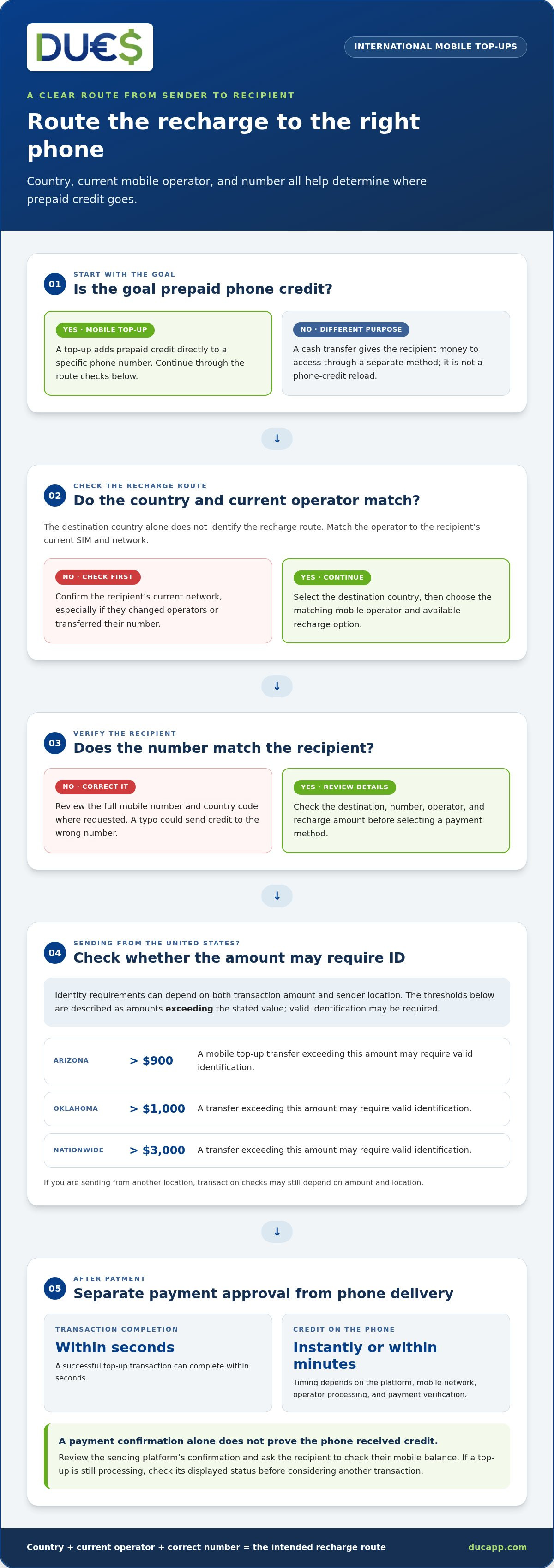
To send an international mobile top-up from the United States, select the recipient’s country, enter their mobile number, choose their network and recharge amount, then select a payment method and complete the transaction. Confirm the country code and number before paying. A typo could send credit to the wrong number.
Coverage is organized by destination country and mobile operator. Confirm that both match the recipient’s SIM, especially if they’ve changed networks or have a number transferred from another operator. The country alone doesn’t identify the recharge route. Operator names help distinguish networks in the same destination.
International recharges are useful when friends or family abroad rely on prepaid mobile service. You can add credit remotely, and the recipient can use it on their phone. You don’t need to be in the same country, but the destination details must match the recipient’s number and network.
- Select the recipient’s country from the destination list.
- Enter their full mobile number, including the country code where requested.
- Choose the recipient’s mobile operator and available recharge option.
- Review the destination and number, select a payment method, and submit.
For US senders, identity requirements can depend on the transfer amount and location. In Arizona, a mobile top-up transfer exceeding $900 may require valid identification. In Oklahoma, a transfer exceeding $1,000 may require valid identification. Nationwide in the United States, a transfer exceeding $3,000 may require valid identification.
Before submitting, compare the displayed operator with the recipient’s current network. This final check helps align the country, number, and carrier for a smoother recharge.
Can I send mobile recharges from abroad?
Yes. You can send an international mobile recharge from abroad by entering the recipient’s mobile number and choosing an available payment method. Transaction checks may depend on the amount and your location.
Transaction thresholds and identity checks
In Arizona, a mobile top-up transfer exceeding $900 may require the sender to provide valid identification. In Oklahoma, a transfer exceeding $1,000 may require identification, while nationwide in the United States, one exceeding $3,000 may require it. These thresholds differ by location, so consider where you’re sending from and the transaction amount before you submit. Have valid identification available if a transaction requires it.
Top-ups versus cash transfers
A mobile top-up adds prepaid credit directly to a phone number. A cash transfer gives the recipient money to access through a separate method. Choose a top-up when your goal is phone credit for a specific number. Mobile credit goes to the number entered, while a cash transfer serves a different purpose.
International mobile transactions may be subject to monitoring and reporting. The Bank Secrecy Act and USA PATRIOT Act are legal frameworks under which transactions may be monitored and reported. Currency Transaction Reporting requirements apply to transactions above certain thresholds. Suspicious Activity Reporting requirements may also lead to review under the Bank Secrecy Act.
Transaction records related to international mobile top-ups are retained securely for five years. Keep the confirmation message or email, and compare the recipient number and amount with your intended transaction. Before authorizing payment, review the recipient details and payment method shown. This gives you a clear record of what you submitted.
For a direct phone-credit transaction, explore international recharges. That route fits when your goal is to add credit to a recipient’s mobile number, rather than send cash.
Top-up delivery times
An international mobile top-up can complete within seconds. The recipient’s prepaid account usually receives credit instantly or within minutes, depending on the platform and mobile network. Operator processing or payment verification can affect the timing. Treat payment approval and account reloading as separate steps: a payment confirmation alone doesn’t show that the phone received credit.
Look for confirmation in two places: the sender’s email or message and the recipient’s mobile account. A top-up may be confirmed when the mobile provider reloads the account or the sender receives a confirmation. For example, if you’re sending credit to a family member, ask them to check their balance while you review your transaction status.
Use these steps to track a recharge without confusing payment status with delivery:
- Save the transaction confirmation after submitting the payment.
- Review the recipient’s number and the selected prepaid account.
- Check for a confirmation email or message from the sending platform.
- Ask the recipient to check their phone balance for the new credit.
Timing varies by operator. One network may reload a prepaid account quickly, while another may take longer to process the same type of top-up. Payment verification can also add time before the operator receives the recharge request. If a top-up is still processing, check its displayed status to see whether it has moved beyond payment approval.
If the recipient doesn’t see the credit, compare the transaction confirmation with the phone number and account details you entered. Keep the confirmation handy, then use the platform’s support channel with the transaction details. This gives support a clear reference for reviewing payment and delivery. Don’t submit the same recharge again until you understand the first transaction’s status, to avoid creating a duplicate request.
To help someone stay connected, plan around the network and payment steps rather than assuming every phone reloads at the same speed. The clearest sign of delivery is the recipient’s updated prepaid balance or confirmation that the provider reloaded the account.
Payment methods
US customers can use the payment methods shown at checkout, which may vary by transaction and destination. The recipient doesn’t need a bank account, credit card, or international payment method to receive airtime or data.
Accepted payment options
Review the choices shown before submitting an international mobile recharge. Select an available option, then check the amount and destination on the payment screen. For anyone comparing cross border mobile top up services, checkout options matter because they determine how the sender can pay. Keep the payment confirmation so you can match it to the recharge later.
Payment security and fraud prevention
Before authorizing payment, compare the destination, phone number, recharge amount, and payment method. A typo could direct credit to the wrong recipient. Use the payment screen for the intended service, and don’t share credentials or verification codes in response to unexpected messages. Save the transaction confirmation for your records.
Payment approval and mobile delivery are separate steps. A transaction may require payment verification before the recharge reaches the recipient’s operator, and operator processing can affect when credit appears. Check the displayed status and keep the receipt rather than paying again immediately. This helps distinguish a pending payment from a completed top-up.
Regulatory monitoring may apply to international mobile transactions. The Bank Secrecy Act and USA PATRIOT Act are frameworks under which transactions may be monitored and reported. Verification or transaction reviews may be part of processing, so payment approval doesn’t necessarily mean the airtime has reached the phone.
A mobile recharge adds prepaid credit or data to a phone. It isn’t the same as paying a household bill or settling a postpaid mobile invoice. If your goal is to keep a prepaid phone connected, choose airtime or data for the correct destination. Compare cross border mobile top up services by the payment options presented, then start an international recharge.
DUC App: International recharges
DUC App offers international recharges to send mobile credit across borders. Once you’ve considered destination coverage, payment options, and delivery factors, choose an international recharge when your goal is to add credit to someone’s phone. Enter the recipient’s details carefully and review the transaction before submitting.
DUC App’s international recharges suit people topping up a friend or family member’s prepaid mobile from abroad. DUC App also offers peer-to-peer transfers, gift cards, and API integration for e-commerce businesses, each for a different transaction need. Choose the service that matches what you want to send.
For phone credit, explore international recharges with DUC App. Visit DUC App to learn more.
Make your next recharge a thoughtful one
A mobile top-up can be a practical way to support someone who relies on prepaid service. Before sending, consider what would make the credit useful, whether for everyday communication, staying reachable while traveling, or having airtime available when needed. Taking a moment to consider their needs can make a quick transaction more helpful.
For future top-ups, keep your routine simple: use the recipient’s preferred number, review the details carefully, and save the transaction record somewhere easy to find. These habits make repeat support easier to manage without relying on memory. Cross border mobile top up services can bridge distance when someone you care about needs phone credit.
Choose the next step that fits your goal. If you’re ready to explore an international recharge, contact DUC App about mobile top-ups. A considered start can make staying connected across borders feel more manageable.
Frequently Asked Questions
What is an international top-up?
An international top-up adds prepaid credit to a mobile number in another country. The terms “recharge” and “top-up” can be used differently by providers, so check whether the option adds credit or extends validity. If someone already has active service but needs extra balance, a credit top-up may suit them. Check which option is offered for the recipient’s destination and mobile network.
Can I pay for a mobile recharge with my credit card?
Yes, if the checkout accepts credit cards. DUC App lists Visa, Mastercard, Discover, American Express, and Diners Club. Review the payment choices shown for your transaction, then check the destination and recharge details before paying. Keep the transaction confirmation to compare with your card statement and recharge record later.
Can I schedule a mobile reload in advance, or set up recurring reloads?
Scheduling and recurring reloads depend on the provider’s options, destination country, currency availability, and identification requirements. If scheduling is supported, look for a future-date or repeat option during setup. Review the timing, recipient’s mobile number, and selected operator before saving. If no scheduling option appears, treat each reload as a separate transaction rather than assuming future payments are arranged.
How do I find out if the mobile reload I sent was successful?
Check the transaction status and confirmation, then compare the details with the recipient’s updated phone balance. Make sure the number and recharge amount on your receipt match what you intended. If the status still shows processing, keep the confirmation handy and avoid submitting another payment immediately. This helps distinguish a delayed update from a duplicate recharge.
How long does it take to get airtime?
Airtime can arrive within seconds, instantly, or within minutes. Timing depends on the platform, the recipient’s mobile network, and any payment verification. For a time-sensitive top-up, submit it before the recipient needs the credit, then watch for confirmation. The recipient’s account balance is a practical way to check whether the airtime reached their phone.
How to top up someone else's phone?
Choose the recipient’s country, enter their mobile number, select their operator and a recharge option, then pay using an available method. Ask the recipient which network serves their number, especially if they recently switched operators. Before submitting, compare the country, number, and operator shown on screen. Save the confirmation so you can refer to the right transaction afterward.


