

A fast top-up should still be a careful payment. To send phone credit abroad securely, use an official recharge service, check the recipient’s country, carrier and number, and protect your card details at checkout. Before paying, review your card provider’s terms for any foreign transaction fees or limits.
Pause before making an international payment. Your card provider may charge a foreign transaction fee, and the recharge service may apply a payment fee. Costs and terms vary by card and service, so review the payment details before submitting.
Compare the final payment details, choose an accepted payment method, and protect your information throughout checkout. Before confirming a recharge, verify the recipient’s details and the amount of credit they’ll receive. These checks help you avoid preventable mistakes when sending phone credit.
Key Takeaways
- Review your card provider’s terms and the checkout total to spot possible foreign transaction and payment fees before you pay.
- Choose a trusted, licensed recharge provider and keep your card details private throughout the transaction.
- Confirm the recipient’s country, mobile carrier, and number before sending credit to help prevent delivery errors.
- Understand what can affect delivery timing, including payment processing and the recipient’s mobile network.
Foreign transaction fees
- Check for charges from both your card provider and the recharge service. Your card provider may apply a foreign transaction fee, while the service may charge a fee to process a card payment. Review the payment summary and your card terms separately to understand which costs come from each.
- Read your card provider’s terms for international payments before choosing a card. Fees depend on the card terms and the transaction, so don’t assume a card used for local purchases will cost the same abroad. Compare the checkout total with your card terms, then decide whether that payment method suits you.
- Check which payment methods the recharge service accepts before entering your details. DUC accepts Visa, Mastercard, Apple Pay, Google Pay, Direct debit SEPA, Interac, Discover, American Express, Bank transfers in USD, iDEAL, Affirm, Afterpay/Clearpay, Diners Club, PayNow, OXXO, Klarna, Cash App Pay and Link. Acceptance can vary by service and location, so use the methods shown at checkout.
- Check for transaction limits before submitting a larger payment. Credit-card issuers and banks may cap a single money-transfer transaction or restrict card-funded transfers. International card providers may also prohibit foreign-card transfers or cap amounts. If a payment is declined, review your card terms and the transaction details before trying another method.
- Are there country or carrier restrictions on international prepaid mobile top-ups? Yes. A top-up depends on whether the service supports the destination country and mobile carrier. DUC offers international recharges; select the recipient’s country and check the available options before paying. Reviewing card fees won’t resolve an unsupported destination or carrier.
- Can an international mobile top-up be reversed if it goes to the wrong number? Don’t rely on reversing a top-up once it’s submitted. Check every digit before authorizing payment and save the confirmation. If you notice an error, act promptly through the service’s support channel and provide the transaction details.
Safest ways to send mobile phone credit abroad
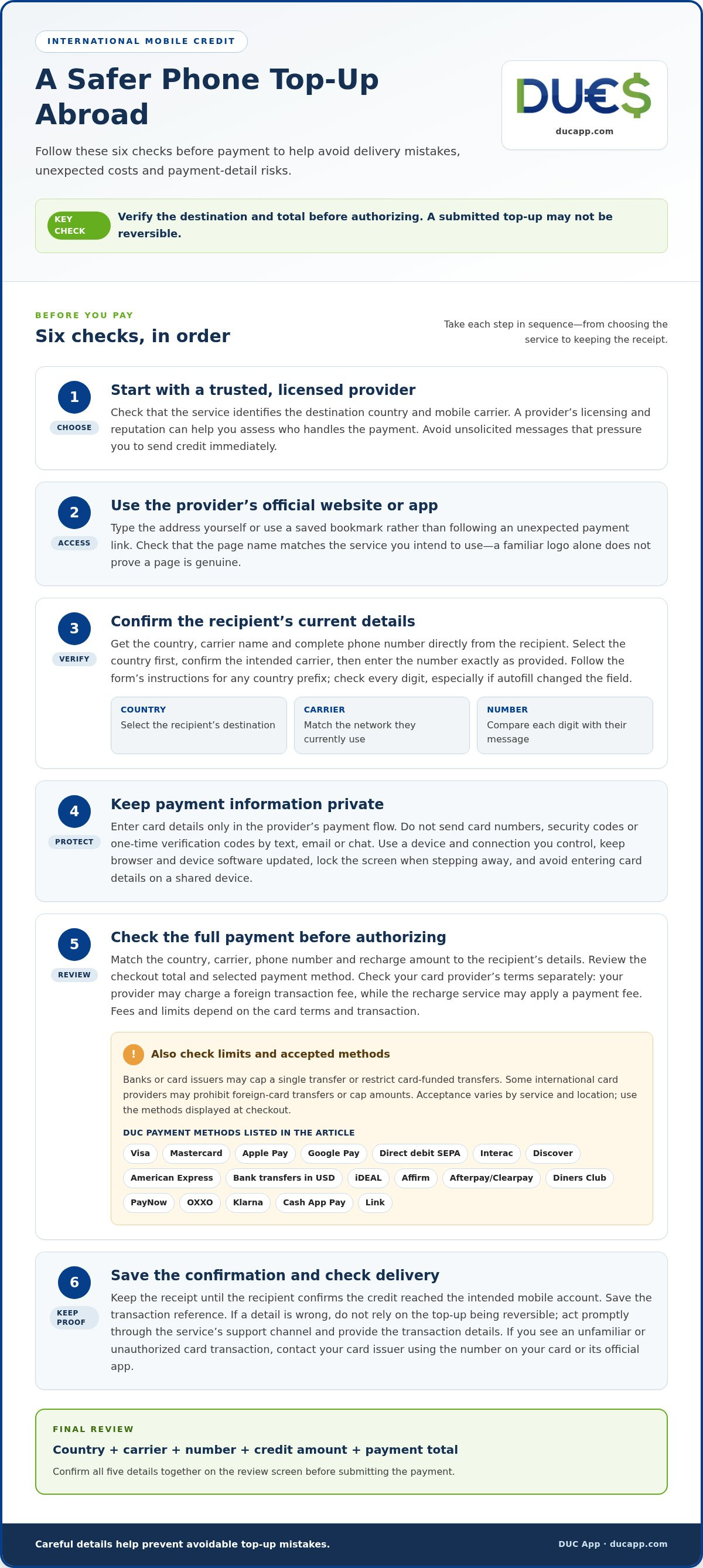
- Choose a licensed, trusted remittance provider for the top-up. Before entering payment details, make sure the service identifies the destination country and mobile carrier clearly. A provider’s licensing and reputation help you assess who handles the payment. Avoid acting on unsolicited messages that pressure you to send credit immediately.
- Start from the provider’s official website or app. Type its address yourself or use a saved bookmark instead of following an unexpected payment link. Check that the page name matches the service you intend to use. A familiar logo alone doesn’t prove that a page is genuine.
- Keep your card information private during checkout. Don’t send card numbers, security codes or one-time verification codes by text, email or chat. Enter payment details only in the provider’s payment flow. If someone asks you to share a code outside that flow, stop and assess the request before continuing.
- Use a device and connection you control. Keep your browser and device software updated, and lock your screen when you step away. Avoid entering card details on a shared device. These habits help reduce the chance of someone seeing saved payment information or accessing an open session.
- Pause at the final review screen. Match the displayed country, carrier, phone number and recharge amount to the recipient’s details. Check the payment total and selected payment method before authorizing. A careful review can catch an incorrect destination or unexpected charge before submission.
- Save the transaction confirmation and check the delivery status. Keep the receipt until the recipient confirms the credit arrived. If the payment status looks unfamiliar or your card shows a transaction you didn’t authorize, contact your card issuer using the number on your card or its official app.
How can I verify a recipient’s country, carrier, and phone number before sending credit?
- Ask the recipient to send their current mobile details directly. Get the country, carrier name and complete phone number in one message. Don’t rely on an old contact entry or a number copied from an earlier transaction. The recipient may have changed carriers or numbers since your last top-up.
- Select the recipient’s country in the recharge form before entering their number. The country selection can affect which carriers and top-up options appear. Compare it with the recipient’s current mobile account, then use the carrier list to confirm the intended network before proceeding.
- Match the carrier name to the network the recipient currently uses. If they’re unsure, ask them to check their phone settings, account or a recent carrier message. Don’t guess based on a brand name you remember. Similar names or a recent carrier change can lead to a wrong selection at checkout.
- Enter the complete number exactly as the recipient provides it. Check every digit, including any country prefix the form requests. Follow the form’s formatting instructions rather than adding or removing digits based on assumptions. Compare the entry with the original message before continuing, especially if autofill changed the field.
- Treat the review screen as a final verification. Confirm the destination country, carrier, phone number and recharge amount together. A correct number paired with the wrong carrier can still send the top-up to the wrong network. Stop before payment if any detail differs from the recipient’s message.
- Share the transaction confirmation with the recipient after submitting. Ask them to check that the credit reached the intended mobile account. Keep the receipt and transaction reference in case you need to identify the order. Don’t submit a second top-up until you know the status of the first.
How quickly does international phone credit arrive, and can delivery be delayed?
- Check the delivery estimate shown at checkout before paying. International top-ups don’t have one universal arrival time. The destination country, carrier, payment processing and network can all affect when credit appears. Use the estimate for the specific country and carrier rather than assuming every destination follows the same timing.
- Review the payment status after submitting your order. A payment marked as processing may not yet have reached the delivery stage. Keep the confirmation or reference details, and use the service’s transaction status to see whether the payment is pending, complete or needs attention.
- Allow payment authorization to finish. Your card issuer may need to approve the transaction before the top-up can proceed. If payment is declined or awaiting authorization, the mobile credit may not be delivered as expected. Check the transaction status and card activity before trying again, to avoid a duplicate order.
- Allow for carrier and network processing. Even after payment is accepted, the recipient’s mobile carrier must process the recharge. Network interruptions or carrier-side delays can affect when the credit appears. Ask the recipient to check their balance or account directly, since a delay in display doesn’t necessarily mean the order failed.
- Use the receipt to investigate a delay. Compare the destination country, carrier, number and amount with the recipient’s details. If the order shows as complete but credit hasn’t appeared, share the transaction reference through the service’s support channel. If it’s still pending, don’t repeat the top-up until you understand the first order’s status.
- Set expectations with the recipient before sending credit for an urgent need. Explain that payment authorization and carrier processing affect delivery, then agree on what to do if the credit doesn’t appear promptly. For a straightforward international top-up, get started with an international recharge after reviewing the destination and checkout details.
DUC App: International recharges
DUC offers international recharges for sending mobile credit across borders. Select the recipient’s country and carrier, enter their phone number, then review the destination and payment details before submitting. Keep the transaction confirmation for your records.
An international recharge is for topping up a mobile account. It’s different from a peer-to-peer transfer or gift card, which serves another purpose. Match the service to your goal: choose a recharge when you want to send phone credit.
Ready to explore international recharges? Visit ducapp.com.
Make your next top-up a confident one
Make cross-border top-ups part of a simple routine rather than a last-minute scramble. Before you expect to send credit, agree with the recipient how they’ll let you know when they need it and whether their mobile details have changed. This helps avoid rushed decisions and makes it easier to choose the right kind of support.
DUC App offers international recharges, peer-to-peer (P2P) transfers, and gift cards. Each option serves a different need, so choose based on what you intend to send rather than treating every cross-border payment as the same task.
A steady routine makes it easier to send phone credit abroad securely while staying in control of each decision. For help with DUC App’s options, contact DUC App. Take the next step when you’re ready, with a clear plan and confidence in your choice.
Frequently Asked Questions
Which international mobile top-up services are reputable and secure?
Choose a service that clearly identifies its business, payment process, and transaction status. Look for a provider described as licensed and trusted, and open its official website or app directly rather than following an unexpected link. DUC App offers international recharges. Before paying, confirm that checkout identifies a mobile top-up and provides a transaction confirmation you can keep.
What payment methods offer the strongest fraud protection for international phone top-ups?
No payment method guarantees protection from fraud. Use a card with account alerts and transaction controls, and review the issuer’s terms for international payments. Debit and prepaid cards are also widely accepted for remittances, but protections vary by issuer and card type. Choose a method accepted at checkout, and never share your card security code or verification code in a message.
What fees and exchange rates do international mobile recharge services charge?
The total may include a service fee, a card-related fee and currency conversion. The amount depends on the service, payment method and currencies involved. Before submitting, compare the displayed total with the credit the recipient is expected to receive. Also review your card provider’s terms, as it may apply a separate foreign transaction fee.
What scams and security risks should I watch for when sending phone credit abroad?
Be cautious of urgent requests to top up an unfamiliar number, pay through an unexpected link or share a verification code. A familiar name in a message doesn’t prove the request is genuine. Confirm unusual requests in a separate, trusted conversation. To send phone credit abroad securely, use the provider’s official checkout and keep your confirmation private.
How do I send an international mobile top-up step by step?
To send phone credit abroad securely, select the recipient’s country and carrier in the recharge service. Enter their number, choose a top-up amount, then review the recipient and payment details before authorizing. Save the confirmation or transaction reference, and ask the recipient to check their mobile account and confirm the credit arrived.


